
A single platform that joins local SEO, keyword research, site audits, and rank tracking with AI-visibility tracking across ChatGPT, Perplexity, Gemini, and Google’s AI Overviews.
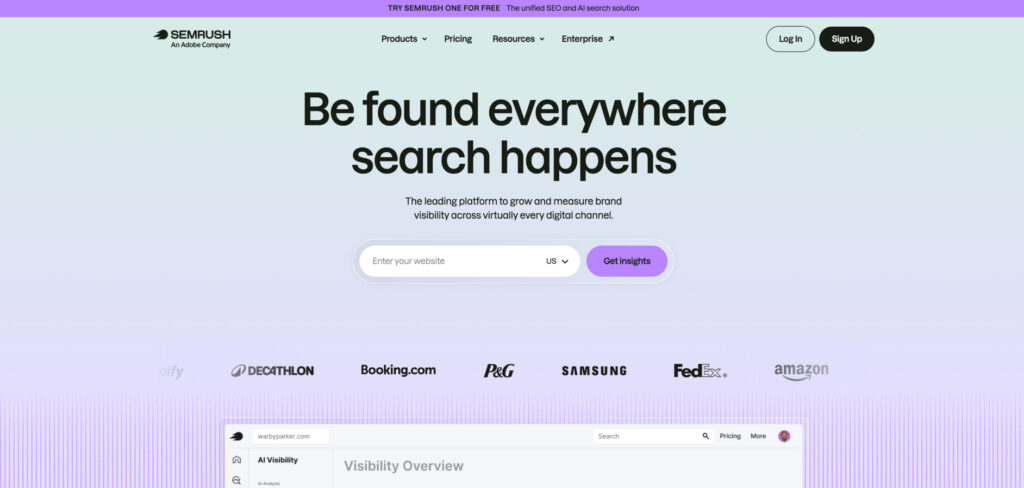
Pricing: Pro $139.95/mo · Guru $249.95/mo · Business $499.95/mo · AI + SEO bundle from $199/mo · 14-day free trial
All-in-one platforms are the Swiss Army knives of search, and for a medical group that wants local rankings, content research, and AI visibility under one login, Semrush is the most complete option. Its Local toolkit manages listings and tracks map-pack positions while the AI toolkit shows how your brand surfaces in AI answers — increasingly where patients start their research.
The advantage is breadth without a second subscription: you can move from a local-rankings report to an AI share-of-voice dashboard to a content brief without leaving the platform, and white-label reporting ties it together for stakeholders or clients. Dedicated tools go deeper on any single job, but nothing mainstream matches Semrush for covering the whole healthcare SEO picture at once.
The trade-offs are price and learning curve. Semrush is among the priciest tools here, the dashboard can overwhelm newcomers, and the richest AI and local features sit in higher tiers. A 14-day free trial makes it easy to test before committing.
Consider Semrush if:
Skip Semrush if:
A local-SEO specialist built around the work that wins patients nearby: map-pack rank tracking, listing management, citation building, and review monitoring across locations.
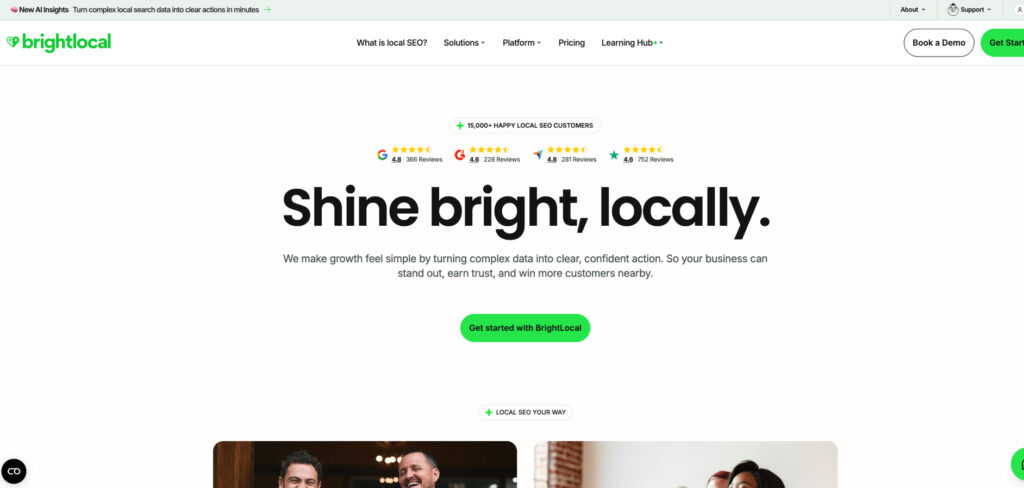
Pricing: Track from $39/mo · Manage $49/mo · Grow $59/mo (per location pricing scales) · 14-day free trial
For most practices, local SEO is the single highest-ROI channel — patients search “urgent care open now” or “pediatrician [city]” and rarely scroll past the map pack. BrightLocal is purpose-built for exactly that, tracking your local rankings grid by grid and keeping your name, address, and hours consistent across the directories Google trusts.
It also audits and builds citations on health-relevant platforms, monitors reviews across sites, and produces clean white-label local reports. For multi-location groups, the per-location structure keeps every site’s visibility visible in one dashboard rather than buried in a general SEO suite.
Consider BrightLocal if:
Skip BrightLocal if:
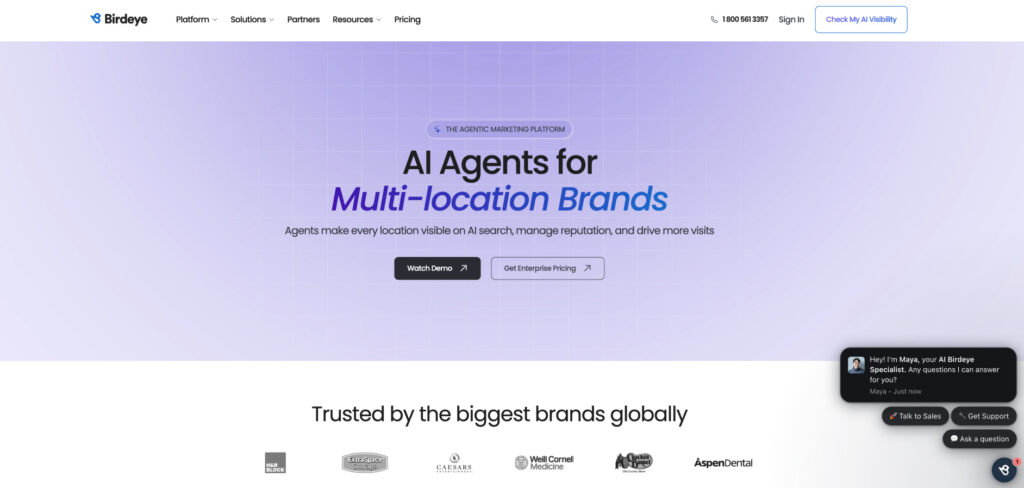
A reputation and listings platform that helps practices collect patient reviews, manage their Google Business Profile, and keep listings accurate at scale.
Pricing: Custom quote-based pricing by location count · demos offered · no public free trial
More than nine in ten patients read reviews before booking, and a medical Google Business Profile is a living page that drives a large share of local outcomes. Birdeye automates the part most practices neglect: requesting reviews after visits, routing them to Google and health directories, and surfacing sentiment so you can respond fast.
It also keeps listings synced across the web and bundles messaging and survey tools that fit front-desk workflows. For a practice whose growth hinges on reputation and local presence rather than blog content, it concentrates effort where the map pack is actually won.
Consider Birdeye if:
Skip Birdeye if:
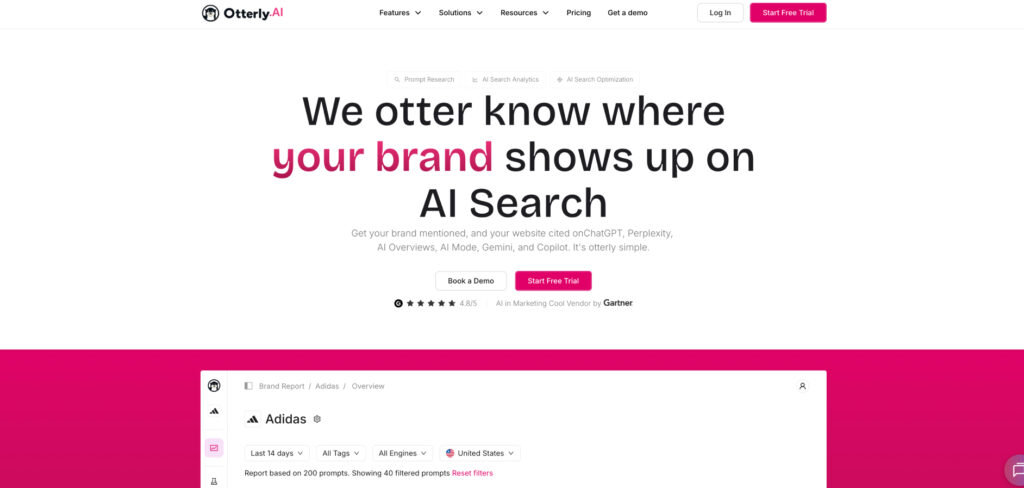
The most accessible way to start monitoring brand mentions and citations across ChatGPT, Perplexity, Google’s AI Overviews, and Microsoft Copilot — at a price a small practice can stomach.
Pricing: Lite from $29/mo (annual; 15 prompts, 4 engines) · Standard ~$160/mo (100 prompts). Gemini and Google AI Mode as add-ons · free trial
Patients increasingly ask AI tools about symptoms, treatments, and providers before they ever click a blue link, and Otterly is the value sweet spot for tracking whether your practice gets mentioned. Setup is straightforward, and it can turn your target health keywords into the kinds of prompts patients actually type.
It covers the major answer engines, benchmarks you against a few competitors, and gives enough data to shape a real generative-engine-optimization strategy. The catch is capacity: prompt limits fill up fast, so if you track many conditions or locations, confirm the higher tiers still make sense before scaling.
Consider Otterly.AI if:
Skip Otterly.AI if:
Analyzes the top-ranking pages for your target term and gives writers real-time, color-coded guidance on terms, headings, and length — helping health content hit the depth Google rewards.

Pricing: Essential $99/mo ($79/mo annual) · Scale $219/mo ($175/mo annual), 7-day money-back guarantee
Healthcare is the hardest content vertical — Google holds it to its strictest YMYL standard — so optimizing for genuine topical completeness rather than keyword stuffing matters more here than almost anywhere. Surfer turns SERP analysis into a live score as you write, making it easy for writers to cover the subtopics that signal expertise.
Its Google Docs and WordPress integrations keep the workflow tight, and the affordable entry tier makes it the most approachable serious content tool for most practices. For teams publishing patient-education pages regularly, it shortens the research-to-draft loop without sacrificing the depth that earns rankings and AI citations.
Consider Surfer SEO if:
Skip Surfer SEO if:
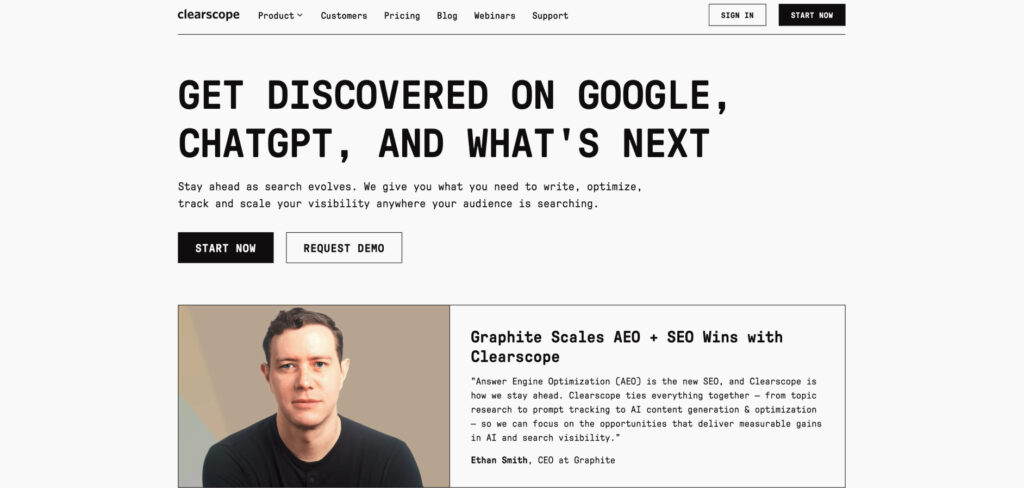
A premium content optimizer focused on topical depth and quality, with a clean editor and topical-map view built for teams that maintain authority across many pages.
Pricing: Essentials from $189/mo · Business and Enterprise tiers scale by seats and content · no free trial
In an AI-search world that rewards comprehensive, authoritative pages, Clearscope helps you build exactly the kind of content models tend to cite — a real advantage in healthcare, where E-E-A-T and demonstrable expertise carry extra weight. Its recommendations push writers toward thorough coverage rather than thin keyword targeting.
Its topical-map view helps a content lead spot and close coverage gaps across a large library systematically, and the clean editor keeps clinician reviewers and writers on the same page. Clearscope won’t track your AI mentions, but it’s a reliable way to produce the depth that earns them.
Consider Clearscope if:
Skip Clearscope if:
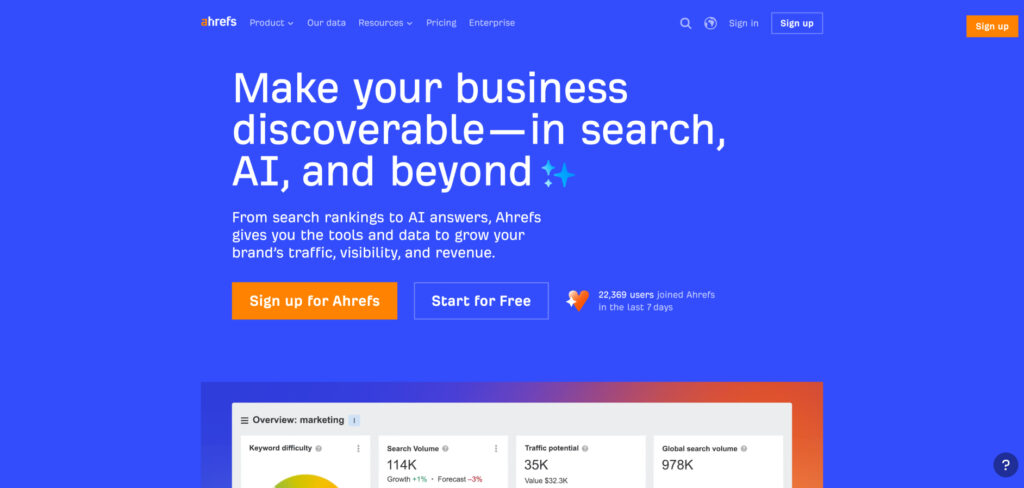
Pairs the industry’s largest backlink index with keyword, competitor, and site-audit tools — plus answer-engine tracking through its Brand Radar add-on.
Pricing: Lite/entry ~$129/mo · Standard $249/mo · Brand Radar add-on priced on top for AI tracking
Authority is a major E-E-A-T signal in healthcare, and earning links from reputable medical and local sources is one of the clearest ways to build it. Ahrefs has the largest, freshest backlink index in the business, which makes it the standard for understanding who links to you, who links to rivals, and where your next links should come from.
The same platform handles keyword research and technical audits, and its Brand Radar add-on layers AI-visibility tracking on top, so a team already living in Ahrefs can add answer-engine reporting without a second login. The catch is cost — it’s a premium suite, and the AI add-on stacks on top.
Consider Ahrefs if:
Skip Ahrefs if:
A desktop crawler that maps your entire site, surfacing broken links, crawl issues, and missing structured data — essential for getting medical pages indexed and eligible for rich results.
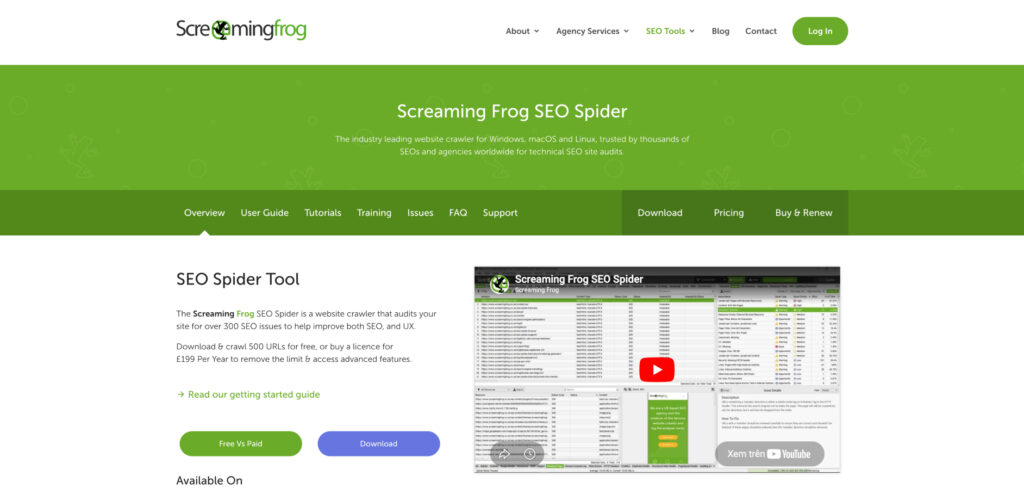
Pricing: Free up to 500 URLs · paid license £199/year (~$259) for unlimited crawling and integrations
Technical health is table stakes before content or links can pay off, and Screaming Frog is the workhorse SEOs reach for. It crawls your whole site the way Google does, flagging broken links, redirect chains, duplicate titles, and the indexation problems that quietly keep service pages off the results.
For healthcare it’s especially useful for auditing structured data — MedicalOrganization, Physician, and FAQ schema help pages qualify for rich results and feed clearer signals to AI engines. The free tier covers small sites; the affordable license unlocks unlimited crawling and integrations for larger practices.
Consider Screaming Frog if:
Skip Screaming Frog if:
Call tracking and analytics that connect search and marketing effort to booked appointments — with a signed BAA available so tracking stays HIPAA-conscious.
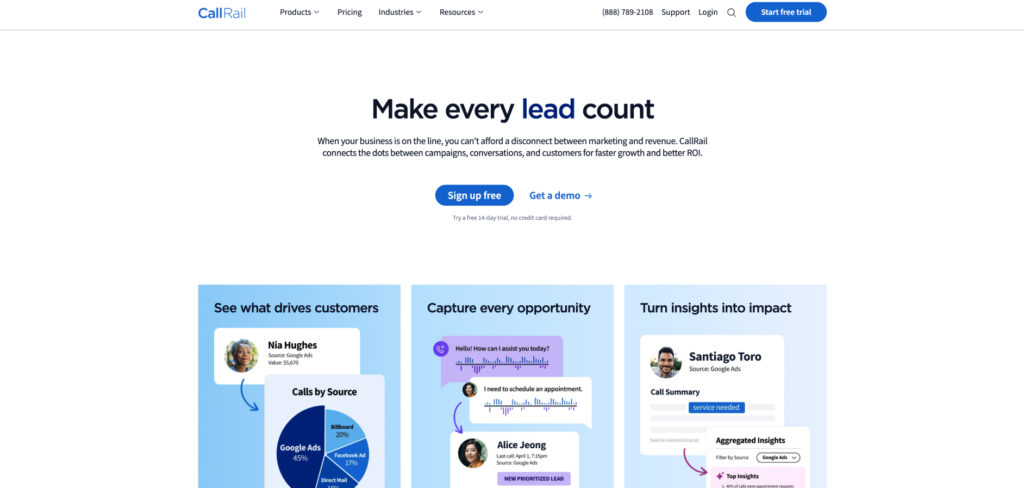
Pricing: Plans from ~$50/mo · usage-based call and number pricing · BAA available · 14-day free trial
Patients still call to book, so SEO that ignores the phone misses much of its own ROI. CallRail ties calls back to the keyword, page, or campaign that drove them, turning “we rank well” into “these pages produced this many booked appointments” — the attribution practice owners actually want.
Crucially for healthcare, CallRail offers a Business Associate Agreement and HIPAA-conscious configuration, which matters because patient data shapes what analytics you’re legally allowed to run. Paired with privacy-aware web analytics, it closes the loop from search visibility to revenue without overstepping compliance.
Consider CallRail if:
Skip CallRail if:
Free, first-party data from Google on how your site actually performs in search — now including impressions and clicks from AI features.
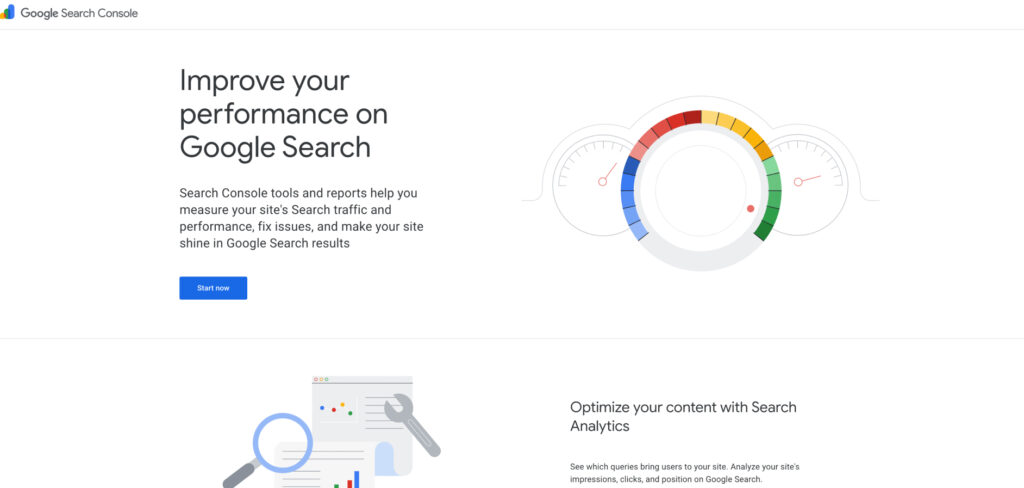
Pricing: Free
Every practice should be using Google Search Console, full stop. It’s the only tool that shows Google’s own view of your pages — which queries you appear for, where you rank, and what’s blocking pages from being indexed. As Google has folded AI Overviews and AI Mode into results, that data increasingly reflects AI-surfaced impressions too.
It won’t track ChatGPT or Perplexity, and it won’t tell you why a model cites you. But paired with a free AI-monitoring trial and a content tool, it forms a genuinely capable no-cost foundation before a practice spends a dollar on paid platforms.
Consider Google Search Console if:
Skip Google Search Console if: