
A dedicated local SEO suite that bundles local rank tracking, Google Business Profile and citation audits, listing management, and review monitoring into one dashboard built for agencies and multi-location brands.
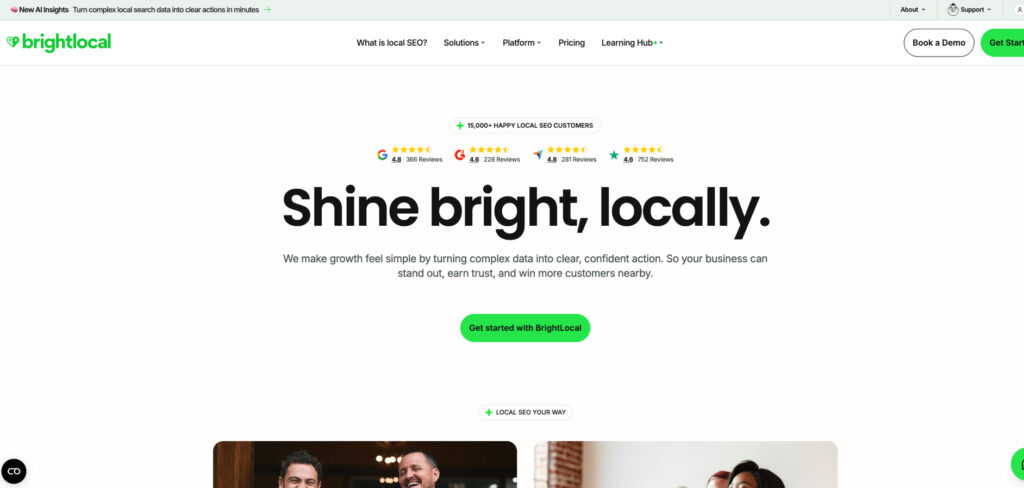
Pricing: Track $39/mo · Manage $49/mo · Grow $59/mo (per location) · ~25% off annual · 14-day free trial, no card
Local SEO has always been a category of its own, and BrightLocal is the tool that has owned it longest. Founded in 2009 and trusted by thousands of agencies and brands, it focuses exclusively on the local stack — Local Search Grid rank tracking, Google Business Profile and citation audits, listing sync, and review monitoring — rather than bolting local onto a general SEO platform.
The appeal in 2026 is breadth at a small-business price: its white-label reports turn ranking, listing, and review data into a client-ready story, and the Local Search Grid is among the most readable geo-grid trackers around. Citation Builder is pay-as-you-go on top of the subscription, and review management lives only on the Grow tier, so map the features you need to the right plan.
It deliberately skips backlink analysis and broad keyword research, so heavy organic teams will still want a general suite alongside it. But as a purpose-built local hub, nothing mainstream is more complete for the money.
Consider BrightLocal if:
Skip BrightLocal if:
The enterprise standard for listing management: it pushes verified business data through direct integrations to a network of 200+ publishers, maps, and apps, with knowledge-graph control across thousands of locations.
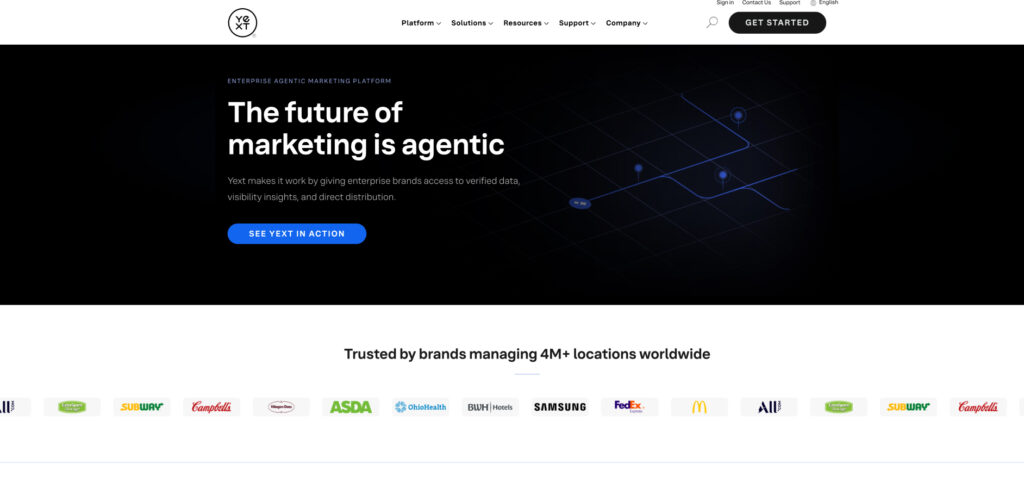
Pricing: Custom, quote-based · modular per-location tiers (entry from ~$199/location/yr) · billed annually · free trial · no public pricing
When a brand runs hundreds or thousands of locations, the problem stops being rank tracking and becomes data control — keeping names, hours, and attributes accurate everywhere at once. Yext solves that with direct publisher integrations rather than aggregator distribution, so an update propagates in minutes instead of weeks.
Its strength is coverage and governance: a central knowledge graph feeds 200+ directories, maps, voice assistants, and increasingly AI answer surfaces, with permissions and analytics built for distributed teams. That breadth is what justifies a premium smaller tools undercut easily.
The trade-offs are price and opacity. Yext doesn’t publish rates, contracts carry annual escalators, and it leans on add-ons for reviews and pages, so total cost can climb. For ten-plus locations that need authoritative listings, though, it remains the category benchmark.
Consider Yext if:
Skip Yext if:
A geo-grid rank tracker that scans Google Maps from a grid of points around a business, turning local visibility into color-coded heatmaps that show exactly where you rank and where you don’t.
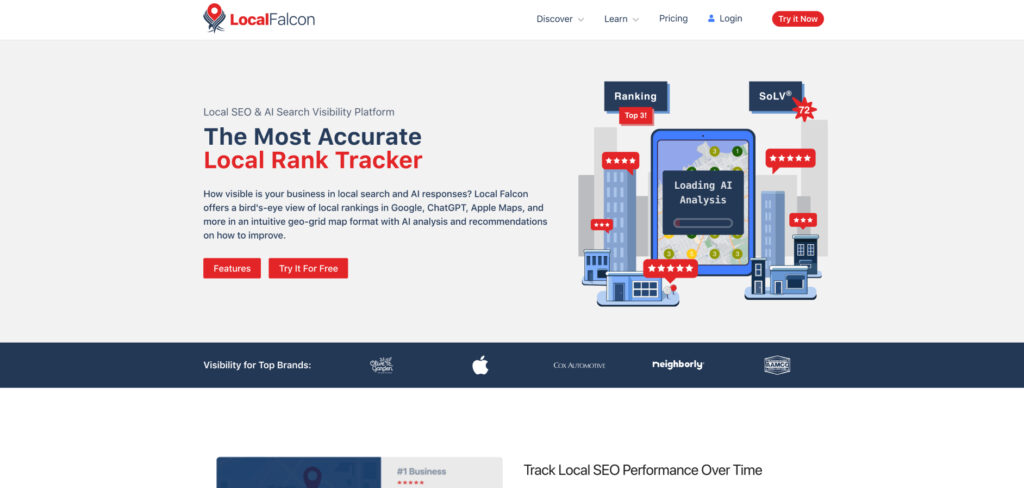
Pricing: Credit-based · Starter $24.99/mo (7,500 credits) · cost scales with grid size and scan frequency (~$3–6/location/mo weekly) · free credits to start
Proximity is the dominant factor in the local pack, which means a single rank number hides the truth: you might be first outside your door and invisible two miles away. Local Falcon’s grid scans expose that geography, producing the cleanest heatmaps in the category and a Share of Local Voice score that’s easy to put in front of clients.
The competitor overlays and historical comparisons make it genuinely diagnostic — you can see a service-area gap, act on it, and measure the change. The catch is its credit model: costs scale with grid size and scan frequency, so weekly scans across many clients add up faster than a flat subscription.
It’s also a tracker first and foremost. There’s no listing sync, posting, or review management here, so most teams pair it with an action layer like BrightLocal or Localo.
Consider Local Falcon if:
Skip Local Falcon if:
The specialist’s local toolkit, best known for the Local Citation Finder and a precise Local Rank Tracker, plus manual citation-building services trusted for NAP cleanup.
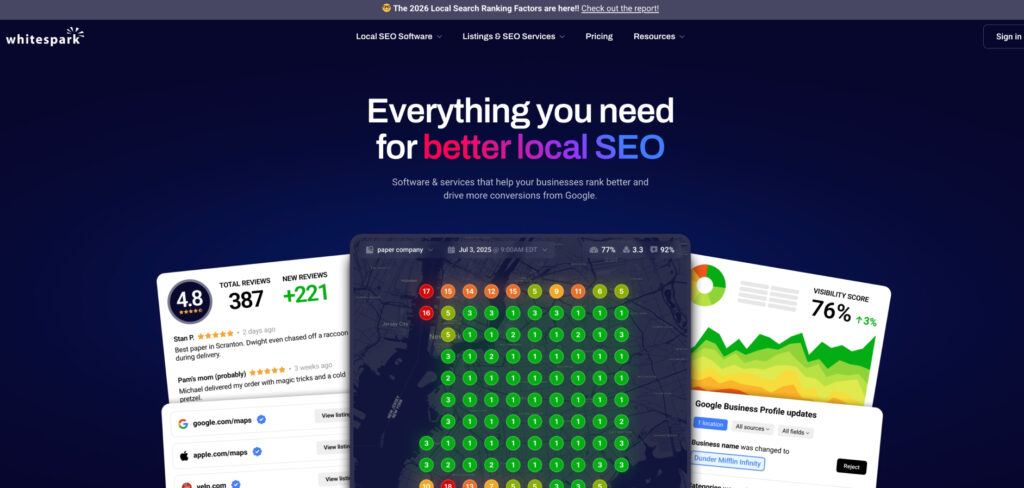
Pricing: Modular · Local Rank Tracker from ~$25/mo · Local Citation Finder from ~$79/mo · Reputation Builder · citation services priced per campaign · free trial
Citations — consistent name, address, and phone mentions across the web — still feed local trust, and Whitespark has built its reputation on getting them right. The Local Citation Finder surfaces where competitors are listed and where your gaps are, while its manual citation services handle the cleanup most automated tools can’t.
Its Local Rank Tracker is among the most accurate in the industry, letting you pin searches to exact coordinates so you see precisely where rankings drop off. The flip side is the modular pricing: the Rank Tracker, Citation Finder, and Reputation Builder are separate subscriptions rather than one all-in-one plan.
For specialists and agencies that sell citation work as a service, that focus is a feature, not a bug. It does less than a full suite, but what it does, it does with unusual precision.
Consider Whitespark if:
Skip Whitespark if:
A no-fuss listing manager that distributes your business data to 90+ directories and keeps NAP details consistent, with a free citation checker to start.
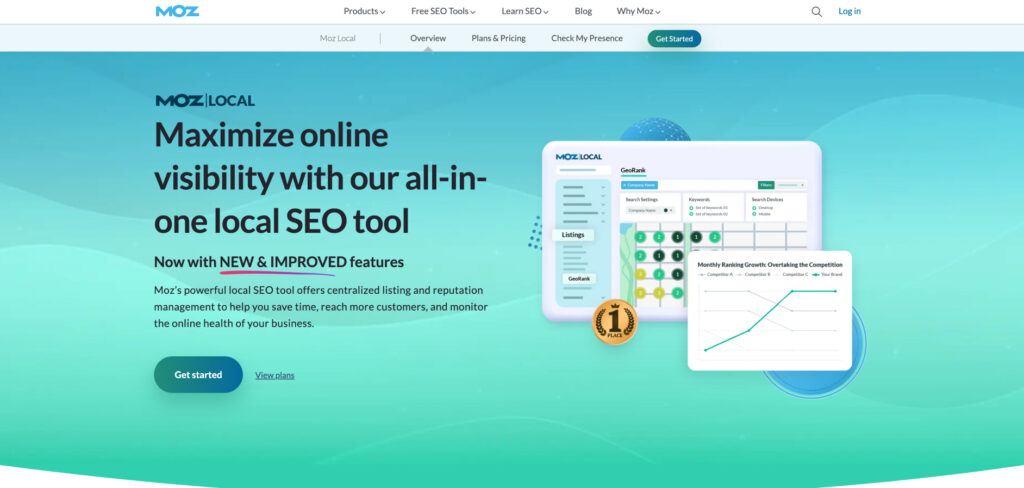
Pricing: Lite from $14/mo · Preferred · Elite (per location, billed annually) · free listing/citation checker · USA, UK & Canada only
Not every business needs a geo-grid or a citation campaign — plenty just need their listings correct and consistent without a learning curve. Moz Local is built for exactly that: connect a location, and it pushes your data to a network of directories on autopilot, suppressing duplicates and flagging inconsistencies.
It’s intentionally lighter than Yext, trading direct-integration speed for aggregator reach and a much lower price, which makes it a sensible pick for one to a handful of locations. A free checker lets you see your current listing accuracy before you pay anything.
The limits are coverage and depth: it serves the US, UK, and Canada only, and it won’t track rankings or manage reviews with much depth. As a clean, cheap listings layer, though, it’s hard to beat.
Consider Moz Local if:
Skip Moz Local if:
Semrush’s local add-on, layering listing distribution, local rank tracking, and a review hub onto the keyword research and reporting teams already use.
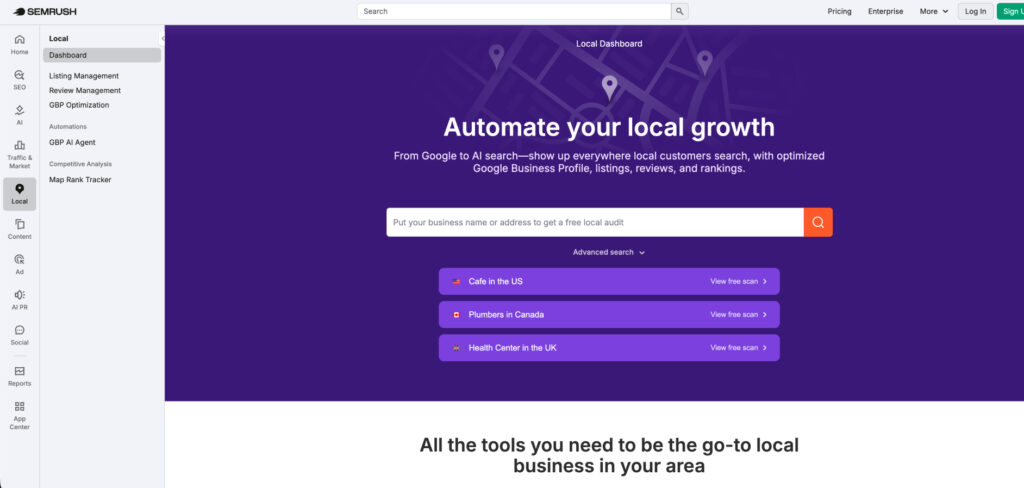
Pricing: Local add-on from ~$40/location/mo (Base ~$30 · Advanced ~$40–60) on top of a Semrush plan · Semrush Pro $139.95/mo · free trial
If your team already opens Semrush every morning, the cleanest local move may be to keep everything in one place. Semrush Local adds a listing-management layer (powered by the Yext network) plus local rank tracking and a review dashboard, sitting alongside the keyword, content, and competitor tools you’re already paying for.
The win is consolidation: you can connect local performance to your broader SEO strategy without exporting between platforms, and reporting ties the two stories together. The Base tier handles set-and-forget listing distribution to 70-plus directories, while the higher tier adds map rank tracking and review management.
It’s an add-on, not a standalone bargain — the value depends on already running Semrush. Dedicated tools go deeper on geo-grids and citations, but nothing mainstream folds local into a full SEO suite as neatly.
Consider Semrush Local if:
Skip Semrush Local if:
An AI-driven reputation and listings platform for multi-location brands, unifying reviews, listings, messaging, and customer feedback in one dashboard.
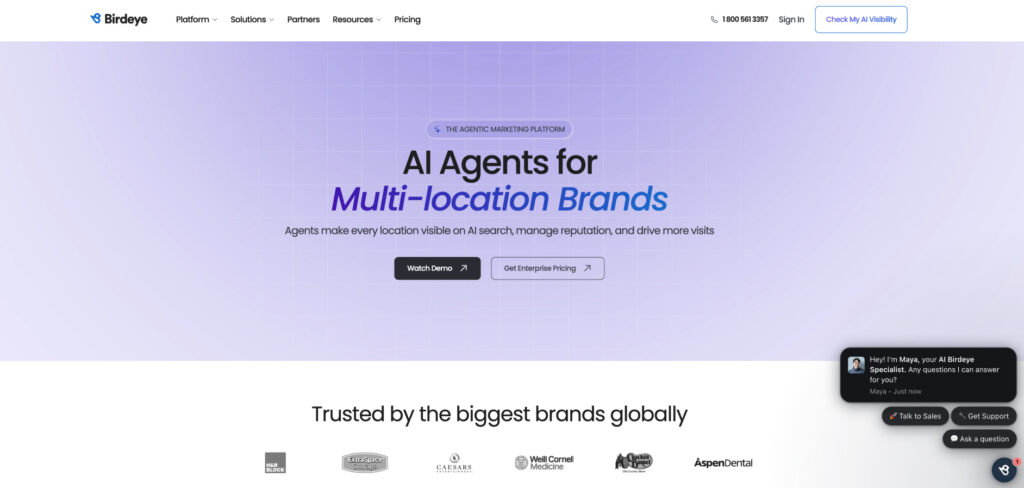
Pricing: Starter $299/mo · Growth $349/mo · Dominate $449/mo (per location) · custom Premium for 4+ locations · demo-based, no public pricing
For many local businesses, reviews are the local SEO lever — volume, rating, and recency all feed the pack — and Birdeye is built to drive them at scale. It triggers review requests from your CRM, aggregates ratings across Google, Yelp, and Facebook into one inbox, and uses AI to draft responses, with listings and messaging bundled alongside.
Its strength is multi-location reputation: centralized control, governance, and AI automation across dozens or hundreds of sites, which is why hospitality and healthcare brands gravitate to it. Listings management rides the same platform, so reviews and NAP data live together.
The cost is real and opaque — pricing is per location, starts high, and isn’t published, with add-ons that climb. For a single location chasing only Google replies it’s overkill, but for a multi-location brand treating reputation as a growth channel, it consolidates a lot.
Consider Birdeye if:
Skip Birdeye if:
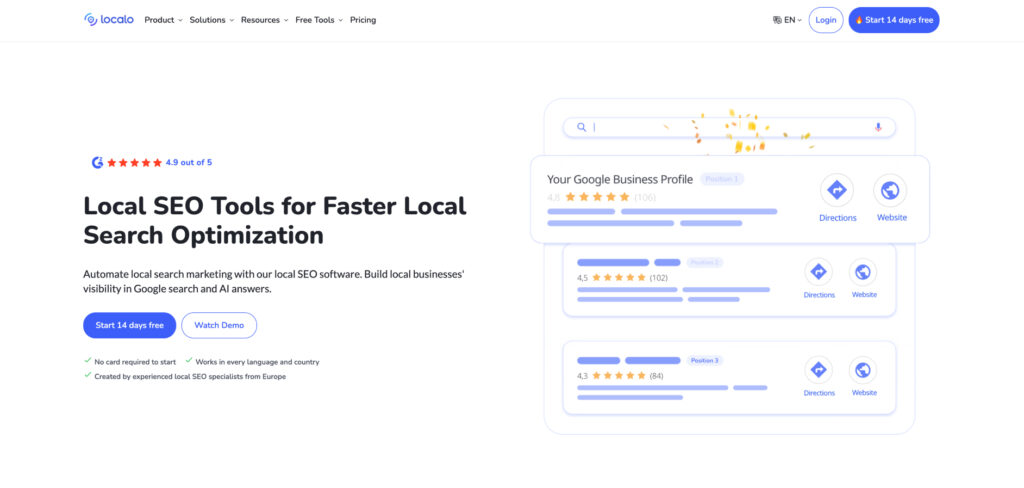
A friendly Google Business Profile optimizer that pairs guided AI “Smart Tasks” with automated geo-grid tracking, aimed at owners and small agencies.
Pricing: Single Business $39–49/mo · Pro $149–169/mo (multiple GBPs) · Enterprise custom · free Local Rank Checker · 14-day trial, no card · 30-day money-back
Localo is the approachable end of the GBP world: connect a profile and it runs an audit, then hands you a short list of specific weekly tasks to work through, which suits owners who don’t want to become SEO experts. Automated grid tracking and review templates round it out.
For agencies, the Pro plan covers many profiles at a low per-location cost, and the guided workflow makes results repeatable across clients without deep expertise on the team. A free Local Rank Checker and a no-card trial make it easy to test.
It is firmly GBP-focused, though — it won’t build your website, add schema, or create service-area pages, and reviewers note its grid figures can sometimes diverge from GBP’s own. Treat it as the map-pack layer, not a complete local program.
Consider Localo if:
Skip Localo if:
An agency-first platform that pairs NLP content optimization with local intent pages, local-pack and organic rank tracking, AI-search visibility, and white-label reporting.

Pricing: Starter $99/mo · Growth $199/mo · Scale $399/mo · unlimited clients & users · white-label + API on every tier · ~17% off annual
Agencies running local campaigns juggle content, rankings, and reporting across many clients, and Rankability is built to keep that repeatable. Its Content Optimizer uses NLP to brief and score local intent pages, while built-in tracking covers local-pack and organic positions plus visibility across AI answer engines.
What sets it apart for client work is consolidation and packaging: unlimited clients and users on every tier, white-label reporting, and API access included rather than gated, so you can tie optimization effort to outcomes without stacking tools. Before-and-after grid comparisons help show clients what moved.
It leans toward content and reporting rather than listings or citation services, so citation-heavy work still wants a Whitespark or BrightLocal alongside. For an agency proving ROI on local content, though, it’s a tidy command center.
Consider Rankability if:
Skip Rankability if:
Free, first-party control of how your business shows up on Google Search and Maps — the foundation every local SEO program is built on.
Pricing: Free
Every local business should claim and optimize its Google Business Profile, full stop. It’s the listing that powers the map pack and Maps, and it’s the one surface where your hours, categories, photos, posts, and Q&A directly shape what searchers see — managed free, straight from Google.
Its built-in performance view shows the searches and actions driving calls, direction requests, and clicks, giving you a no-cost read on local visibility before you spend on any paid tool. Keeping it accurate and active is the single highest-leverage local task there is.
It won’t track grid rankings, manage citations across directories, or watch competitors, so you’ll outgrow it. But paired with a free rank checker and a listings tool, it’s a genuinely capable foundation at zero cost.
Consider Google Business Profile if:
Skip Google Business Profile if: