
The most complete SEO suite on the market, bundling keyword research, audits, rank tracking, backlinks, content, and competitive intelligence into one sprawling platform.
Pricing: Pro $139.95/mo · Guru $249.95/mo · Business $499.95/mo · 14-day free trial
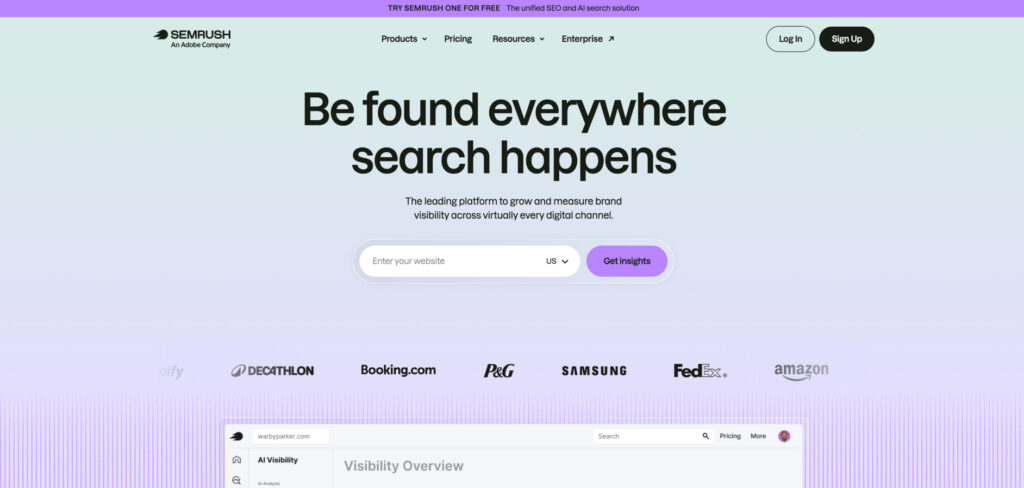
If breadth is what you’re after, nothing mainstream matches Semrush. A single login covers keyword research, site audits, rank tracking, backlink analysis, content optimization, local SEO, and even PPC and social — the kind of coverage that lets a marketing team retire several smaller subscriptions at once. For most teams, it’s the tab they open first every morning.
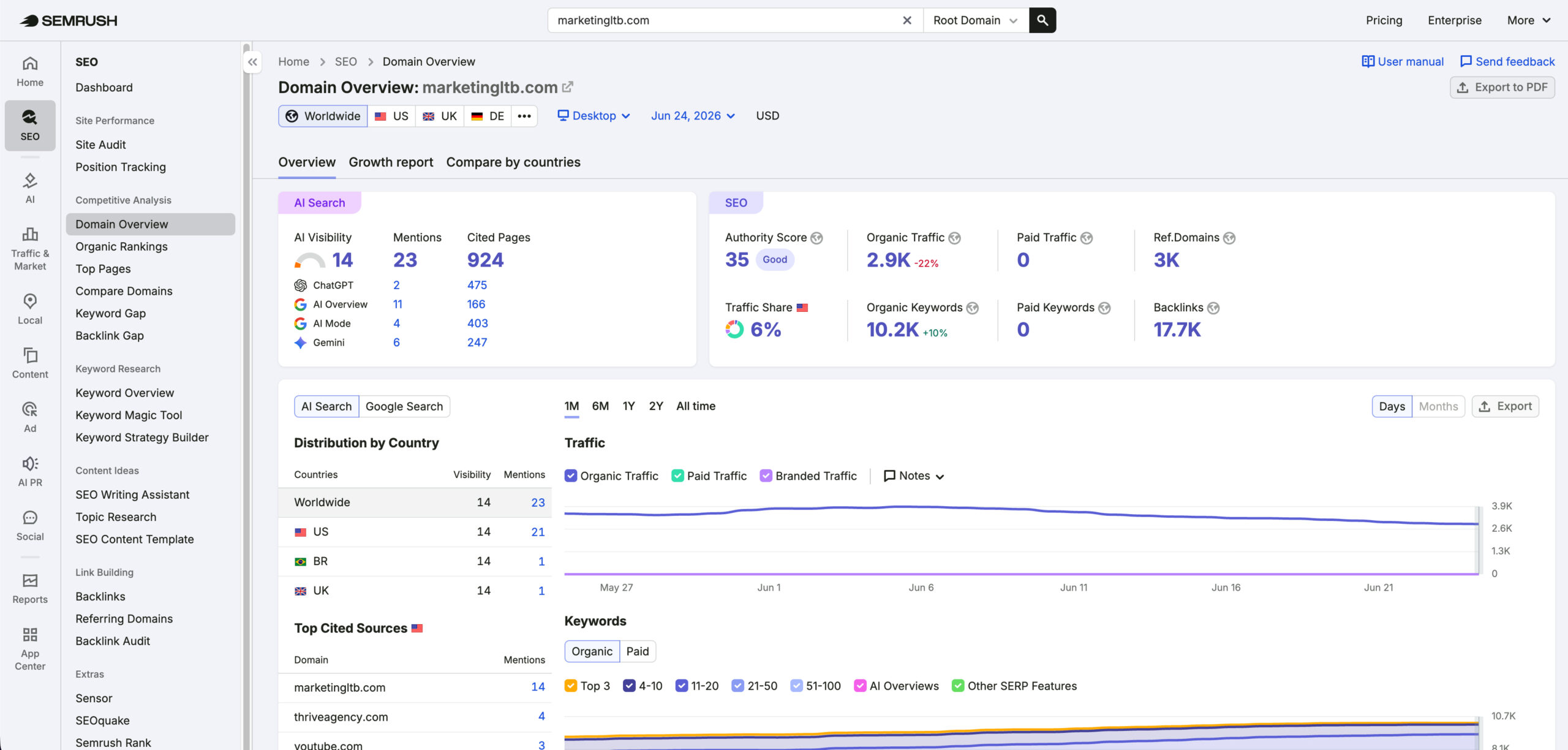
In 2026 that breadth now stretches into AI search: Semrush tracks how your brand surfaces across ChatGPT, Perplexity, Gemini, and Google’s AI Overviews alongside its classic ranking data, so old and new search live in the same dashboard. White-label reporting ties the whole story together for clients.
The trade-offs are price and complexity. Semrush sits at the top of the range here, much of the richest data is gated behind higher tiers and per-user fees, and the sheer number of tools can overwhelm newcomers. A 14-day free trial makes it easy to test the waters first.
Consider Semrush if:
Skip Semrush if:
Built on the largest and freshest backlink index in the business, now grown into a full suite covering keywords, audits, rank tracking, and content.
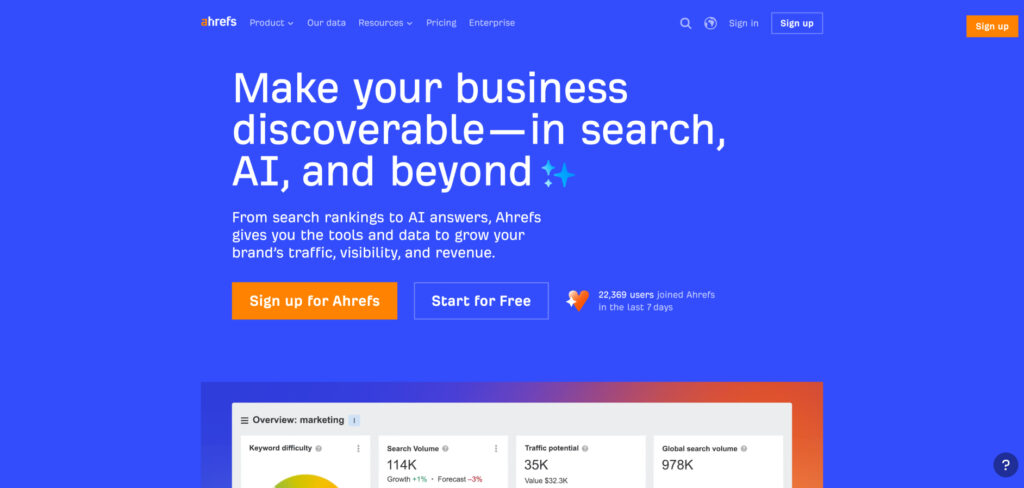
Pricing: Lite $129/mo · Standard $249/mo · Advanced $449/mo · Enterprise from $14,990/yr · free Webmaster Tools for sites you own
Ahrefs earned its reputation on link data, and that advantage still holds in 2026 — its crawler and index remain the benchmark for backlink and referring-domain analysis. But the platform long ago outgrew its origins, adding keyword research, site audits, rank tracking, and a content explorer that together make it a genuine all-in-one.
Where it stands out is data quality: rankings and link metrics tend to track closely to reality, and the interface stays clean even as the feature set grows. Its Brand Radar add-on now layers AI-answer visibility on top for teams that want to monitor mentions in LLM results.
The catch is cost and credits. Pricing starts higher than most mid-market suites, several actions consume credits that fill up quickly, and daily rank updates and AI tracking cost extra. There’s no traditional free trial, though Ahrefs Webmaster Tools gives free audits and backlink data for sites you own.
Consider Ahrefs if:
Skip Ahrefs if:
A genuinely complete SEO platform — rank tracking, audits, keyword research, backlinks, and reporting — at a fraction of what the big two charge.
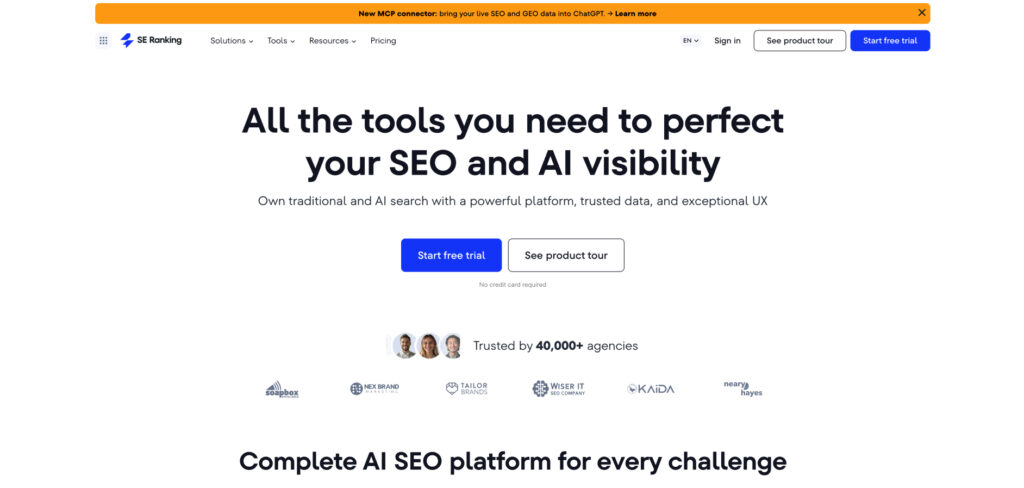
Pricing: Essential $65/mo ($52 annual) · Pro $119/mo ($95.20 annual) · Business $259/mo ($207.20 annual) · 14-day free trial
SE Ranking is the value sweet spot for anyone who wants the full all-in-one experience without an enterprise bill. It covers daily rank tracking, technical audits, keyword and competitor research, and backlink monitoring, and it bundles in seats and AI-search tools that rivals charge extra for.
What makes it punch above its price is completeness: where budget tools often skimp on one area, SE Ranking delivers a credible version of nearly every core SEO task, plus white-label reporting that makes it a favorite among smaller agencies. Newer AI Overviews and AI-visibility trackers keep it current with the 2026 search landscape.
It isn’t quite as deep as Semrush or Ahrefs on backlinks and keyword databases, and heavy users may bump into tracking limits, but for most sites the gap rarely matters next to the savings.
Consider SE Ranking if:
Skip SE Ranking if:
The friendliest way into all-in-one SEO, pairing approachable tools and Domain Authority with a famously gentle learning curve.
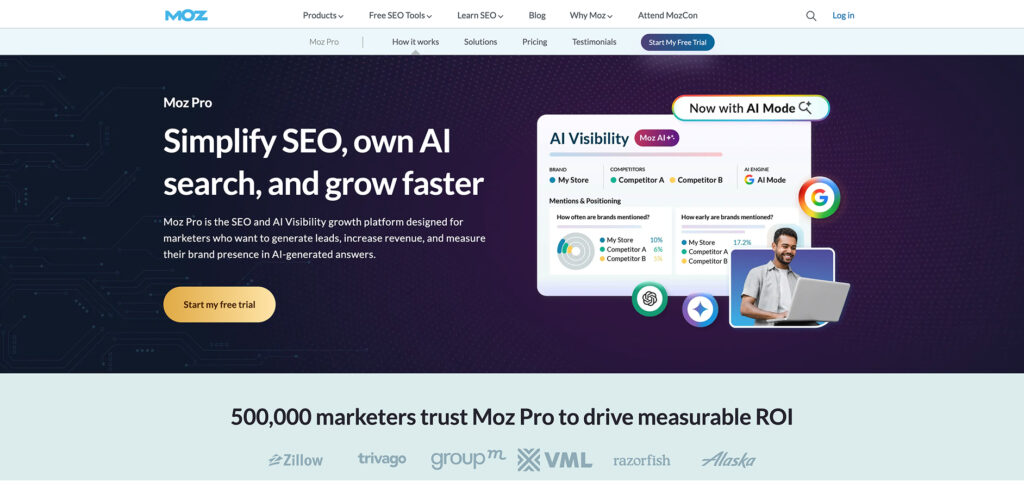
Pricing: Starter $49/mo · Standard $99/mo ($79 annual) · Medium $179/mo ($143 annual) · Large $299/mo ($239 annual) · 30-day free trial
Moz built its name on making SEO understandable, and that’s still its pitch in 2026. The platform simplifies keyword research, rank tracking, site audits, and link analysis into a workflow newcomers can actually follow, backed by some of the best free learning resources in the industry. Its Domain Authority metric remains a widely used shorthand for site strength.
For solo marketers and small teams who find Semrush or Ahrefs intimidating, Moz Pro is the gentler on-ramp — clean dashboards, clear guidance, and a generous 30-day trial to learn the ropes.
The downsides are depth and price. Its keyword and backlink databases trail the market leaders, AI-search features lag behind rivals, and at $99 a month for the popular Standard plan it’s no longer the bargain it once was, with extra seats adding up quickly.
Consider Moz Pro if:
Skip Moz Pro if:
Five clean, beginner-friendly tools — keyword research, SERP analysis, rank tracking, backlinks, and site metrics — at a price freelancers can stomach.
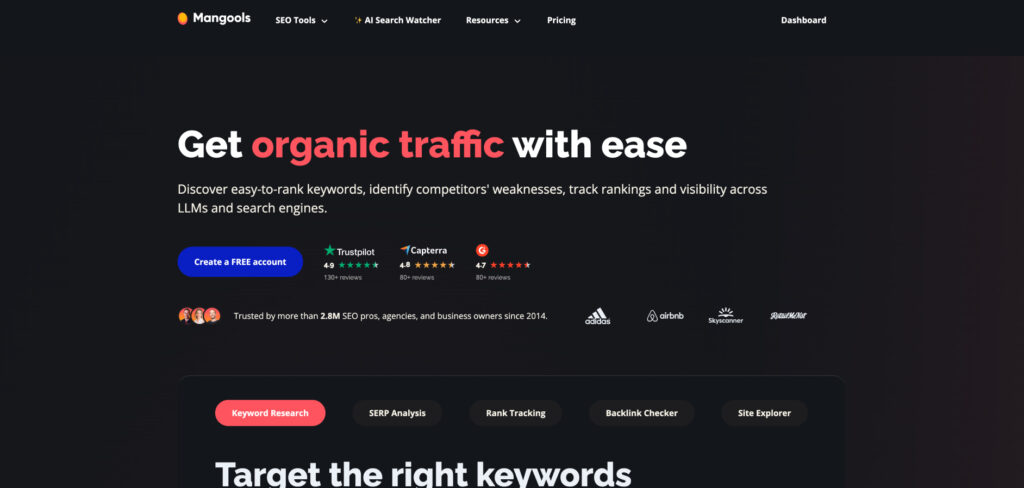
Pricing: Entry from ~$29/mo (annual) · Premium $44.90/mo · higher tiers scale by limits · 10-day free trial, 48-hour money-back
Mangools wins fans by being the opposite of overwhelming. Its five tools — KWFinder, SERPChecker, SERPWatcher, LinkMiner, and SiteProfiler — cover the daily essentials with one of the cleanest interfaces in SEO, making it a natural first paid tool for bloggers and solo marketers.
It doesn’t pretend to be an enterprise platform, and that focus is the point: setup is quick, the data is reliable for everyday research, and the price stays low even on higher tiers. A browser extension and a handful of free mini-tools round out the value.
The limits show up when you scale. Project management, deep technical auditing, and large-volume tracking aren’t its strengths, so growing teams often outgrow it — but as an affordable, friendly toolkit it’s hard to beat.
Consider Mangools if:
Skip Mangools if:
A feature-rich, budget-friendly all-in-one popular with European and agency teams, with strong keyword clustering and competitor gap analysis.
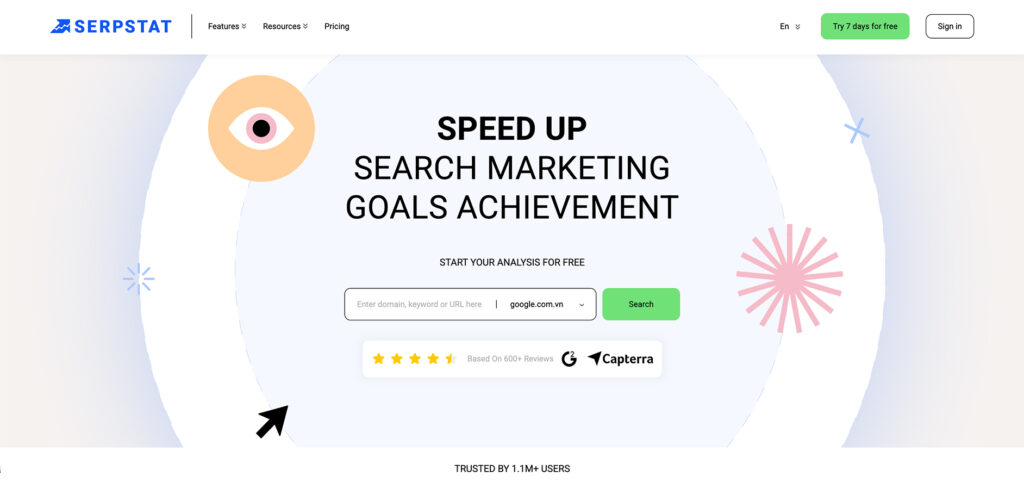
Pricing: Lite from ~$50/mo · plans scale by limits and seats · free trial available
Serpstat has quietly built one of the most complete toolsets in the affordable tier. Alongside the usual rank tracking, audits, and backlink analysis, it offers automated keyword clustering and competitor gap analysis that some pricier suites skip — features agencies serving international markets lean on heavily.
Founded in Ukraine and popular across Europe, it pairs depth with a price that competes directly with SE Ranking, plus AI-assisted tools for content auditing and drafting. For teams running involved campaigns on a budget, it offers more analytical horsepower than its cost suggests.
The trade-off is polish: the interface is busier than Mangools or Moz, and some workflows feel less refined than the market leaders’. But for feature-per-dollar, few suites match it.
Consider Serpstat if:
Skip Serpstat if:
Neil Patel’s approachable all-in-one, notable for a generous free tier and a one-time lifetime payment option that sidesteps monthly fees.
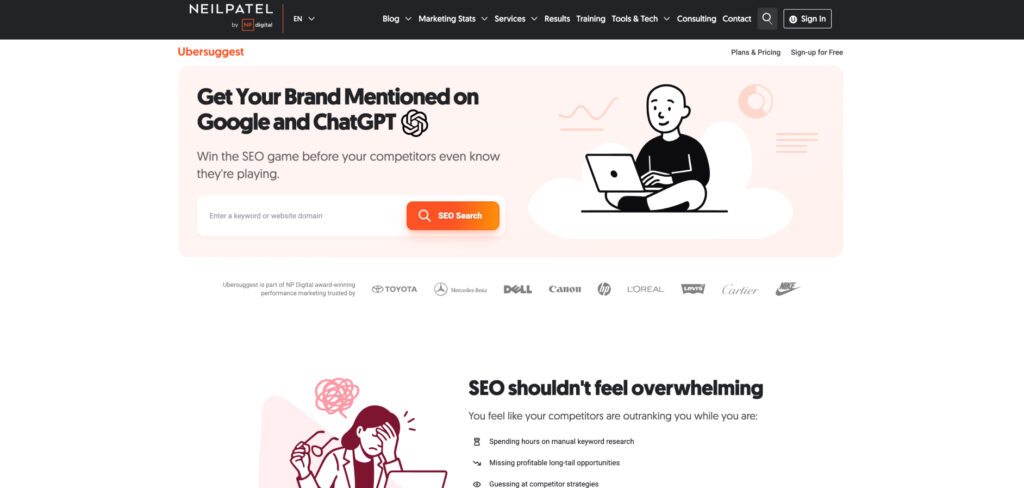
Pricing: Individual $29/mo · Business and Enterprise tiers higher · lifetime plans from ~$290 one-time · 7-day free trial
Ubersuggest grew from a simple keyword tool into a credible all-in-one, covering rank tracking, keyword and competitor research, site audits, and backlink data in a deliberately beginner-friendly package. It’s a frequent pick for those just learning the ropes.
Its standout is pricing structure. A genuinely useful free tier lets you test before paying, and the lifetime deal — a one-time payment for ongoing access within plan limits — is rare in a market built on subscriptions, making it appealing to freelancers and small businesses wary of recurring costs.
The features are solid rather than deep — you won’t find Ubersuggest topping lists for audit or link-building rigor — but for the price, it gets the everyday jobs done, sometimes more simply than its bigger rivals.
Consider Ubersuggest if:
Skip Ubersuggest if:
A competitive-research powerhouse with eighteen years of historical keyword and ad data, unlimited searches, and standout PPC intelligence.
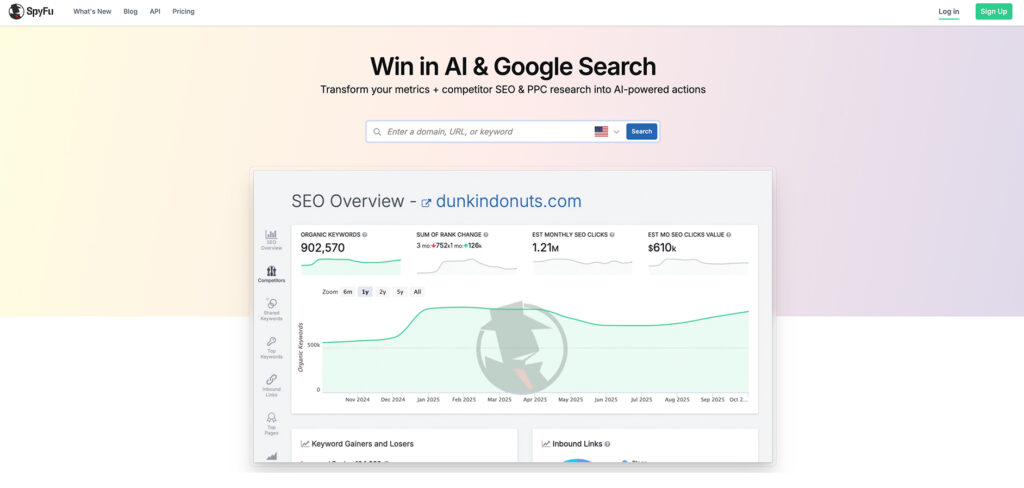
Pricing: Basic $39/mo · Professional $79/mo · Team $299/mo (annual billing) · unlimited searches and exports · no free trial
SpyFu approaches all-in-one from the competitor angle. Its specialty is showing exactly what rivals rank for, what they bid on, and how their strategy has shifted — backed by up to eighteen years of historical keyword and ad data that no mainstream suite matches.
The model is unusually generous: even entry plans include unlimited searches and exports, eliminating the credit anxiety that comes with Ahrefs or Semrush. For paid-media teams and anyone running competitor teardowns, that depth-plus-unlimited combination is exceptional value.
It’s less of a complete suite than Semrush — site auditing and backlink analysis are lighter, and many users pair it with a free crawler or Search Console — but for competitive and PPC intelligence specifically, it punches far above its price.
Consider SpyFu if:
Skip SpyFu if:
The industry-standard desktop crawler for technical SEO, dissecting site architecture, redirects, metadata, and crawl issues in granular detail.
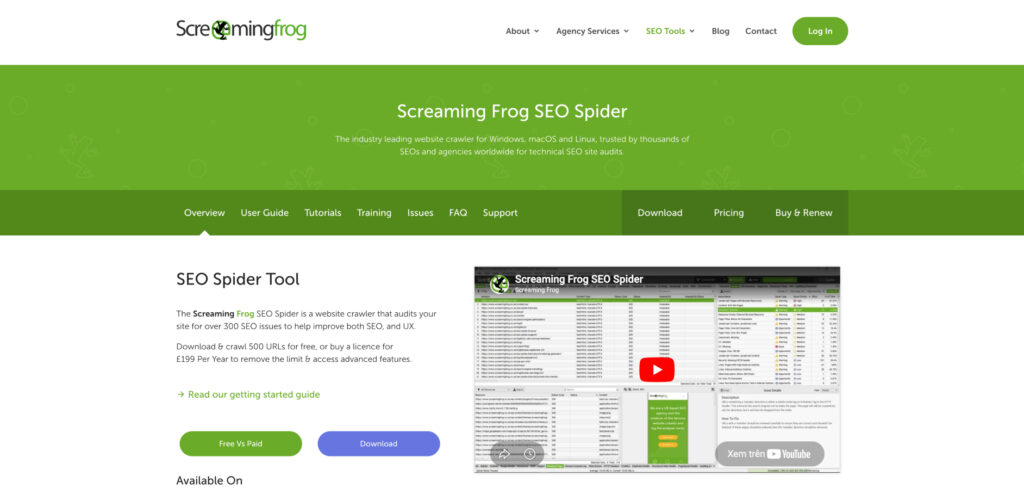
Pricing: Free up to 500 URLs · paid licence £199/yr (about $259) for unlimited crawling and advanced features
Screaming Frog isn’t an all-in-one in the dashboard sense — it’s a desktop spider — but no technical SEO toolkit is complete without it. It crawls a site the way a search engine would, surfacing broken links, redirect chains, duplicate content, missing metadata, and crawl-depth problems that cloud-based suites often gloss over.
Its depth is the draw: it integrates with Google Analytics, Search Console, and PageSpeed Insights, supports custom extraction, and handles large sites that overwhelm lighter audit tools. For diagnosing why pages aren’t ranking, it’s the tool most technical SEOs reach for first.
The free tier handles small sites up to 500 URLs, and the paid licence unlocks unlimited crawling for a flat annual fee — a bargain next to monthly suites, though it pairs best with a research platform rather than replacing one.
Consider Screaming Frog if:
Skip Screaming Frog if:
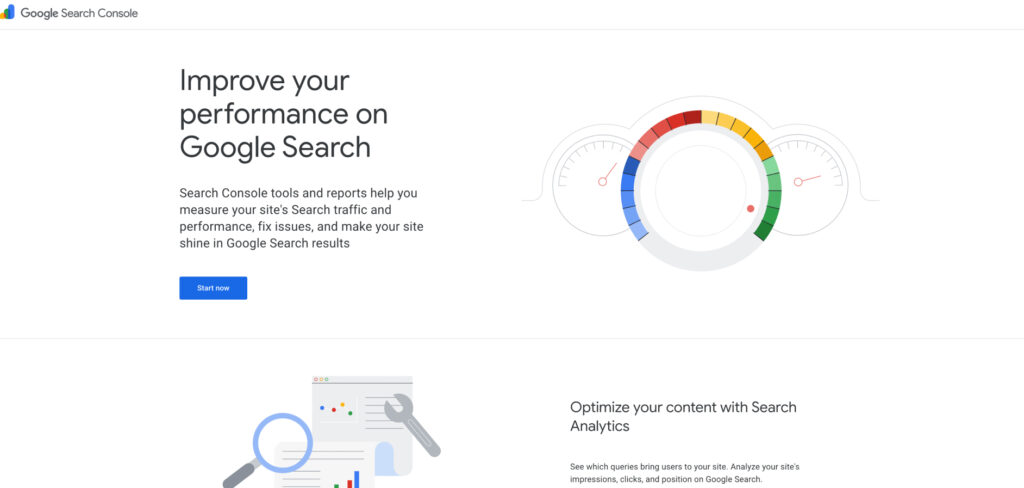
Free, first-party data from Google on how your site actually performs in search — now reflecting impressions from AI features too.
Pricing: Free
Every site should be on Google Search Console, full stop. It’s the only tool that shows Google’s own view of your pages — which queries you appear for, where you rank, your click-through rates, and what’s stopping pages from being indexed. No third-party estimate comes closer to the truth.
As Google has folded AI Overviews and AI Mode into results, that performance data increasingly captures AI-surfaced impressions too, giving you a free, if partial, read on your AI visibility. It also flags technical and Core Web Vitals issues directly from the source.
It won’t research keywords, spy on competitors, or track other engines, so it’s a foundation rather than a full suite. But paired with a paid platform — or even a free crawler — it anchors any SEO stack at zero cost.
Consider Google Search Console if:
Skip Google Search Console if: