
The enterprise standard for answer-engine intelligence: it tracks brand mentions, citations, and sentiment across the major LLMs and shows the exact sources shaping every answer.
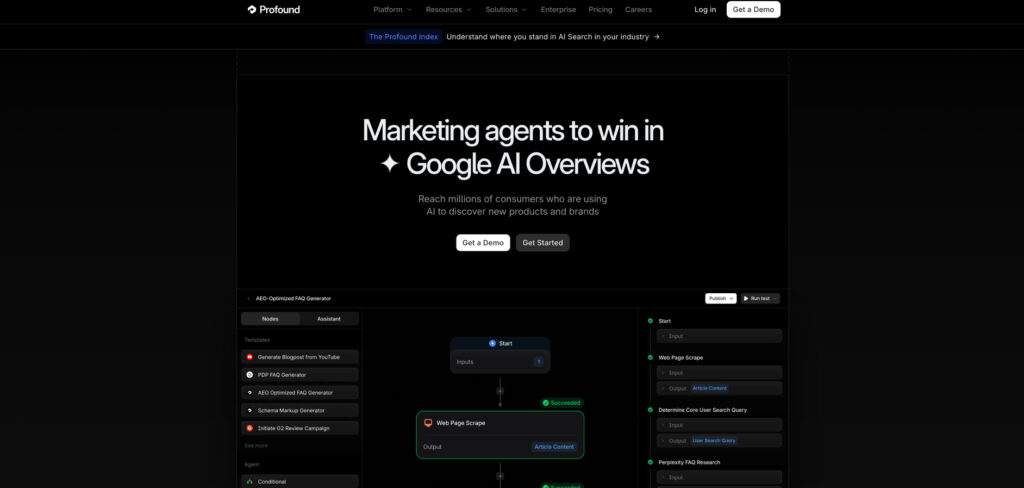
Pricing: Starter from ~$82.50/mo (annual, 50 prompts) · Growth ~$332.50/mo (100 prompts) · Enterprise custom · demos offered, no free trial
If LLM SEO tracking is your whole reason for buying a tool, Profound is the one the largest teams reach for. It goes past a single share-of-voice score to surface the prompts that trigger your mentions, the competitors who win the answers you lose, and the underlying pages and forum threads the models actually cite — across ChatGPT, Perplexity, Gemini, Copilot, and Google’s AI Overviews.
That source-level depth is what separates Profound from cheaper monitors: it turns AI visibility from a metric you watch into a workflow you can act on. Backed by heavy funding and a roster of large clients, it’s built for teams that treat answer-engine presence as a board-level priority rather than a side experiment. The trade-off is price and prompt limits that make it hard to justify at small scale.
Consider Profound if:
Skip Profound if:
A single login that joins classic SEO — keyword research, audits, rank tracking — with LLM visibility tracking across ChatGPT, Perplexity, Gemini, and Google’s AI Overviews.
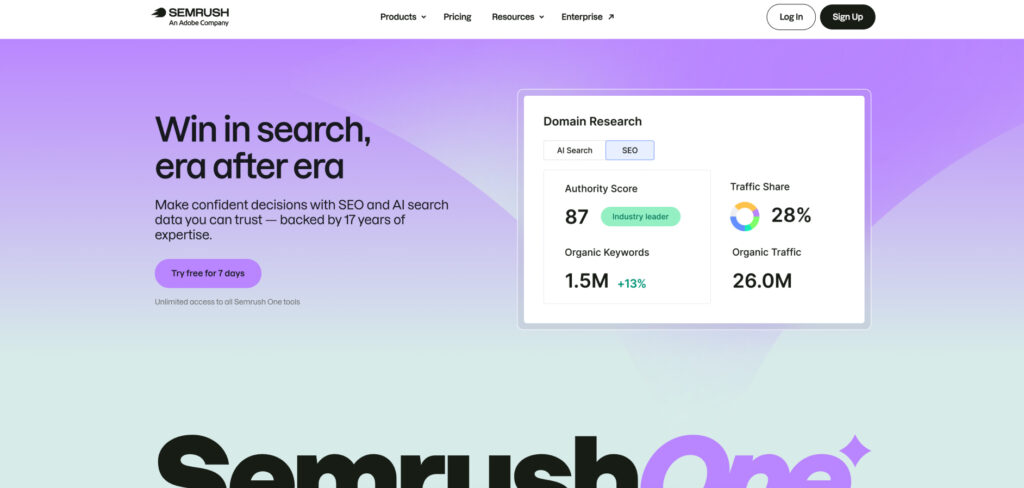
Pricing: Semrush One (AI + SEO bundle) from $199/mo · Pro $139.95/mo · Guru $249.95/mo · Business $499.95/mo · 14-day free trial
If you’d rather not run a second subscription just for AI, Semrush is the suite that has folded LLM tracking most convincingly into existing SEO tooling. Its AI Toolkit reports how your brand shows up in AI-generated answers and which sources those models pull from, sitting right beside the keyword research, site audits, and competitor analysis teams already rely on every morning.
The headline is breadth without a second login: you can move from a classic ranking report to an AI share-of-voice dashboard without leaving the platform, and white-label reporting ties both stories together for clients. Dedicated trackers like Profound go deeper on answer-engine intelligence, but nothing mainstream matches Semrush for covering old and new search in one place. The catch is price and a dashboard that can overwhelm newcomers.
Consider Semrush One if:
Skip Semrush One if:
A complete SEO platform with UI-based AI visibility tracking, piping citations and mentions across AI Overviews, AI Mode, ChatGPT, Gemini, and Perplexity into the same dashboards as your rankings.
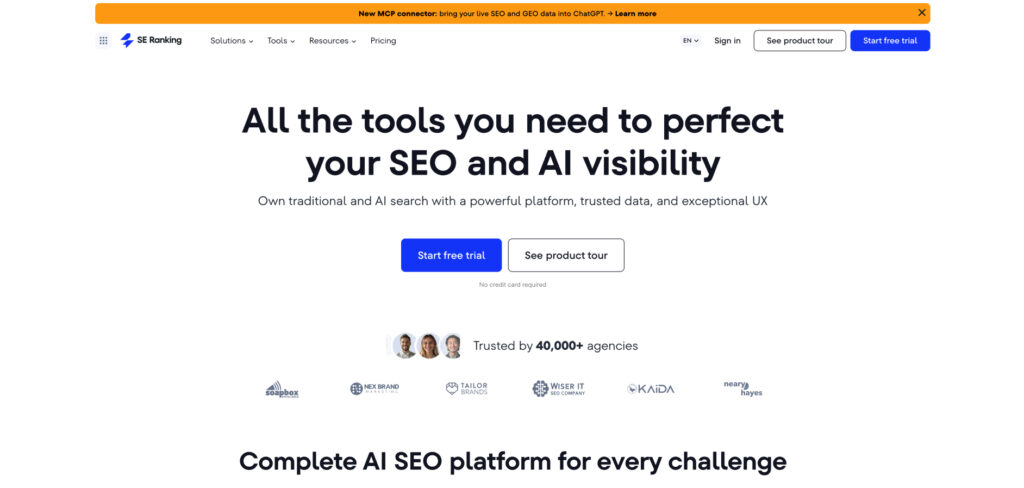
Pricing: Core $129/mo (2k keywords, 100 prompts) · Growth $279/mo (5k keywords, 250 prompts). 14-day free trial · 20% off annual
SE Ranking is the value-minded alternative to Semrush for teams that want rank tracking, keyword research, audits, and backlinks alongside LLM monitoring without the premium price tag. Its AI visibility tracker simulates real user behavior in the UI rather than hitting APIs, which tends to produce citation and mention data closer to what an actual person sees in an answer.
A companion product, SE Visible, extends the monitoring with deeper citation analysis, prompt research, and sentiment tracking, while GA4 integration and an MCP server let you pipe data into the reports and AI assistants your team already uses. For mid-sized brands and agencies it hits a sweet spot between a full suite and a dedicated tracker.
Consider SE Ranking if:
Skip SE Ranking if:
The most accessible way to start monitoring brand mentions and citations across ChatGPT, Perplexity, Google’s AI Overviews, and Microsoft Copilot — at a price freelancers can stomach.
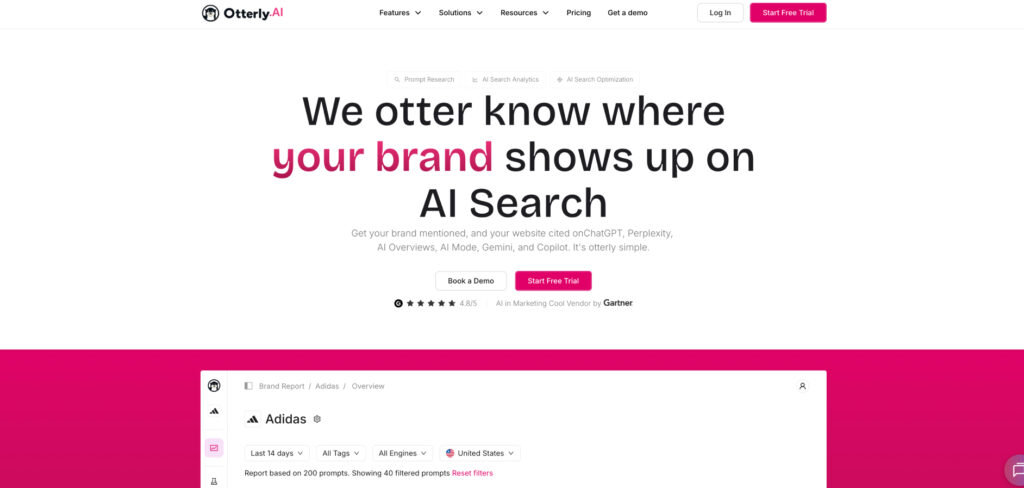
Pricing: Lite from $29/mo (annual; 15 prompts, 4 engines) · Standard ~$160/mo (100 prompts). Gemini and Google AI Mode as add-ons · free trial
Otterly is the value sweet spot for smaller brands, freelancers, and agencies that want ongoing LLM tracking without an enterprise contract. Setup is straightforward, and a nice touch for anyone already doing SEO is that it can turn your target keywords into related LLM prompts, so you’re tracking the questions your audience actually asks.
It covers the major answer engines, benchmarks you against a handful of competitors, and delivers enough data to shape a real generative-engine-optimization strategy. The catch is capacity: prompt limits fill up fast, so if you manage many clients or topics, confirm the higher tiers still make economic sense before you scale.
Consider Otterly.AI if:
Skip Otterly.AI if:
A fast-growing analytics-first tracker favored by mid-market teams and agencies, with a clean interface, competitor benchmarking, and a Looker Studio connector.
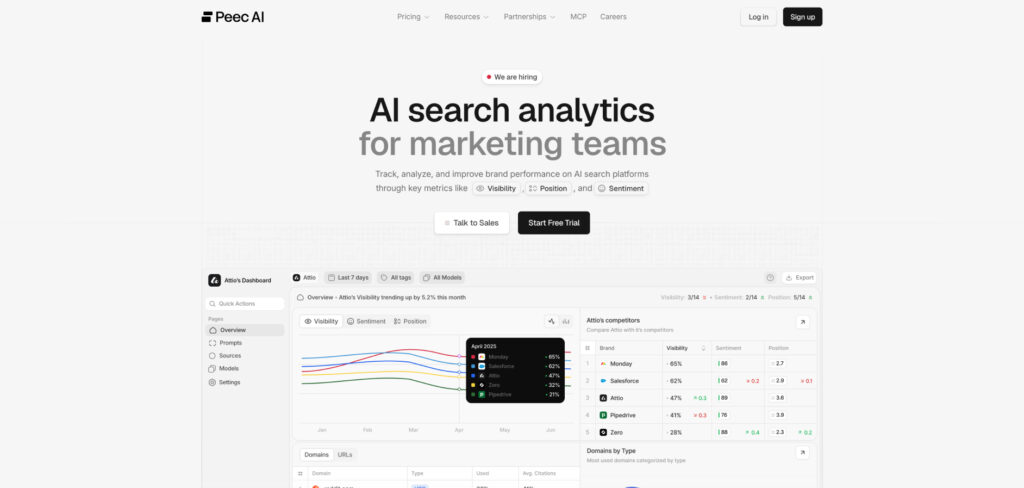
Pricing: From about €89/mo · higher tiers scale by prompts and engines. Free trial available
Peec has become the challenger that mid-market marketing teams and agencies keep shortlisting for LLM tracking. Its interface is friendly, its competitor comparisons are easy to read, and its Pitch Workspaces are designed specifically to help agencies win new business by putting a prospect’s AI-visibility data next to rivals’.
Under the hood it leans on UI scraping that simulates real user behavior rather than hitting APIs, which tends to produce results closer to what an actual person sees in an AI answer. A Looker Studio connector pipes live visibility and source data into the dashboards teams already use, and a layer of smart suggestions proposes the most relevant prompts and competitors to track.
Consider Peec AI if:
Skip Peec AI if:
An enterprise GEO/AEO platform tracking brand visibility across nine AI engines, with strong GA4 referral attribution, AI-crawler monitoring, and persona-level filtering.
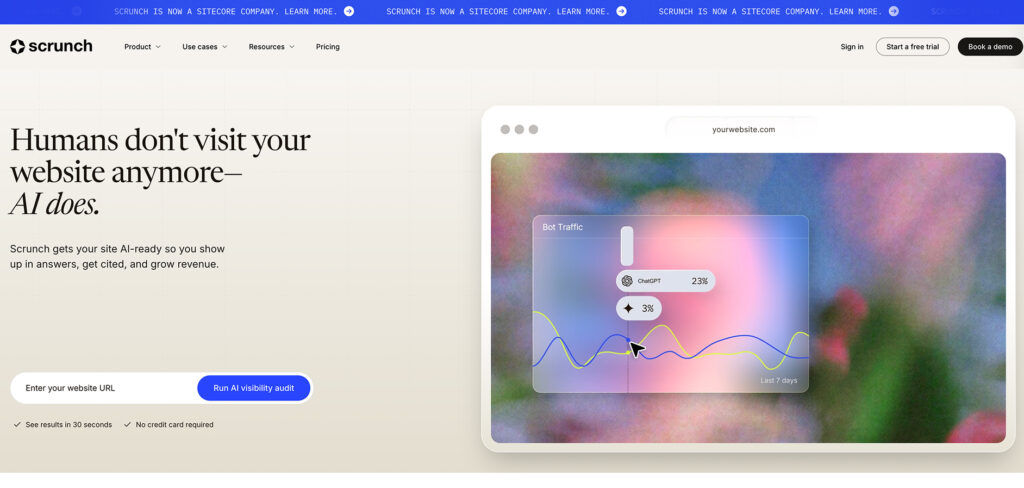
Pricing: Core $250/mo · Enterprise custom · Agency Core $500/mo. 17% off annual · no free trial
Scrunch is aimed at enterprise and agency teams that want to know not just whether they appear in AI answers but how AI crawlers and agents interact with their site. It monitors mentions and citations across ChatGPT, Claude, Perplexity, Gemini, Copilot, Grok, and Google’s AI surfaces, and its GA4 integration is among the better ways to tie AI referral traffic back to actual outcomes.
Granular filtering by persona, topic, and funnel stage makes it useful for large brands with complex audiences, and SOC 2 compliance plus white-glove onboarding suit security-conscious buyers. Watch the prompt-credit system, though: credits are consumed per engine tracked, so a modest prompt set spread across many models can deplete an allowance faster than expected.
Consider Scrunch AI if:
Skip Scrunch AI if:
Ahrefs’ answer-engine add-on, pairing the industry’s largest backlink index with tracking of how often your brand appears across AI answers.

Pricing: Brand Radar about $699/mo on top of an existing Ahrefs subscription. Ahrefs Lite/entry ~$99–$129/mo · Standard $249/mo
Ahrefs built its reputation on the largest and freshest backlink index in the business, and that data advantage still holds in 2026. Brand Radar layers LLM-visibility tracking on top, so the same platform you use for link and competitor research can also report how often you surface in AI-generated answers — at the scale and data depth Ahrefs is known for.
The appeal is consolidation: if your team already lives in Ahrefs, adding answer-engine tracking to the same toolset is tidier than running a separate subscription. The catch is cost — Brand Radar is a significant add-on on top of an already premium suite, so it makes most sense for teams that need both link forensics and AI tracking at scale.
Consider Ahrefs Brand Radar if:
Skip Ahrefs Brand Radar if:
An approachable AI visibility tracker that pairs prompt-level monitoring with built-in publishing workflows, aimed at teams who want to act on the data, not just watch it.
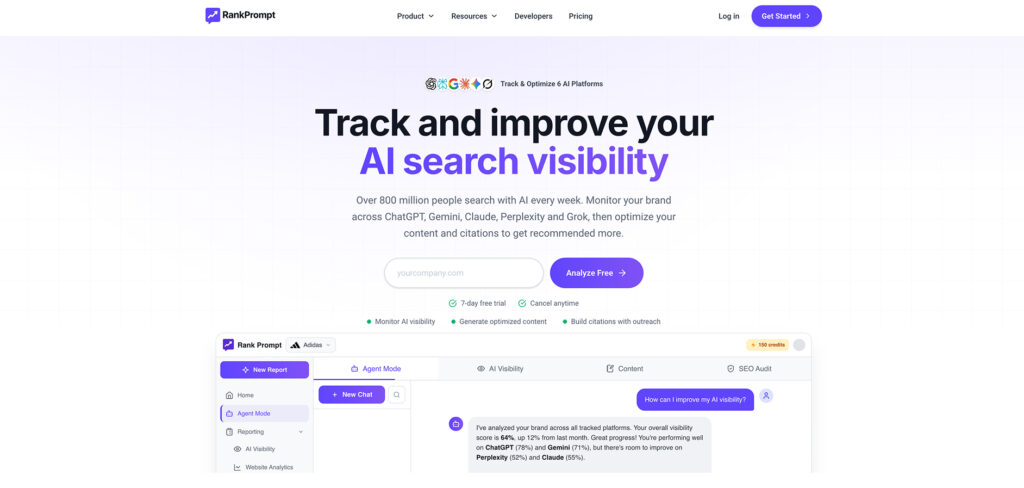
Pricing: Entry tiers scale by prompts and engines · budget-friendly starting plans, free trial available
Rank Prompt has carved out a niche as a practical, lower-friction place to start tracking LLM visibility. It monitors mention rate and citations across the major answer engines and competitor set, but its differentiator is workflow: it leans toward helping you turn findings into published content rather than leaving you with a dashboard and no next step.
For solo creators and small teams that find enterprise tools overwhelming, that focus on getting from insight to action is the appeal. It won’t match Profound’s source-level forensics or Ahrefs’ data depth, but as an accessible entry point into answer-engine tracking with a path to publishing, it’s a sensible first tool.
Consider Rank Prompt if:
Skip Rank Prompt if:
Surfer’s AI Tracker monitors mention rate and visibility across ChatGPT, Perplexity, and Google’s AI Overviews, sitting alongside the content optimizer teams already use to earn those citations.

Pricing: Essential $99/mo ($79/mo annual) · Scale $219/mo ($175/mo annual), 7-day money-back guarantee
Surfer is the most practical dual-purpose pick for teams that want to track LLM visibility and act on it without splitting their workflow. Its AI Tracker reports how often you surface in AI answers and how that changes over time, right next to the SERP-driven content scoring that helps writers produce the comprehensive, authoritative pages models tend to cite.
As search shifts toward AI Overviews, optimizing for topical completeness rather than keyword stuffing matters more than ever, and Surfer’s guidance pushes writers in exactly that direction — then its tracker tells you whether the optimized pages are actually getting surfaced. Google Docs and WordPress integrations keep the loop tight for teams publishing regularly.
Consider Surfer AI Tracker if:
Skip Surfer AI Tracker if:
Free, first-party data from Google on how your site actually performs in search — now including impressions and clicks from AI features.
Pricing: Free
Every site should be using Google Search Console, full stop. It’s the only tool that shows you Google’s own view of your pages — which queries you appear for, where you rank, and what’s blocking pages from being indexed. As Google has folded AI Overviews and AI Mode into results, that performance data increasingly reflects AI-surfaced impressions too, giving you a free, if partial, read on AI visibility.
It won’t track ChatGPT or Perplexity, and it won’t tell you why a model cites you. But paired with a free LLM-monitoring trial and a content tool, it forms a genuinely capable no-cost foundation before you spend a dollar on a paid tracker.
Consider Google Search Console if:
Skip Google Search Console if: