
The incumbent enterprise platform: a vast keyword universe, site audits at serious URL scale, AI-powered recommendations, and executive reporting that ties SEO to revenue.
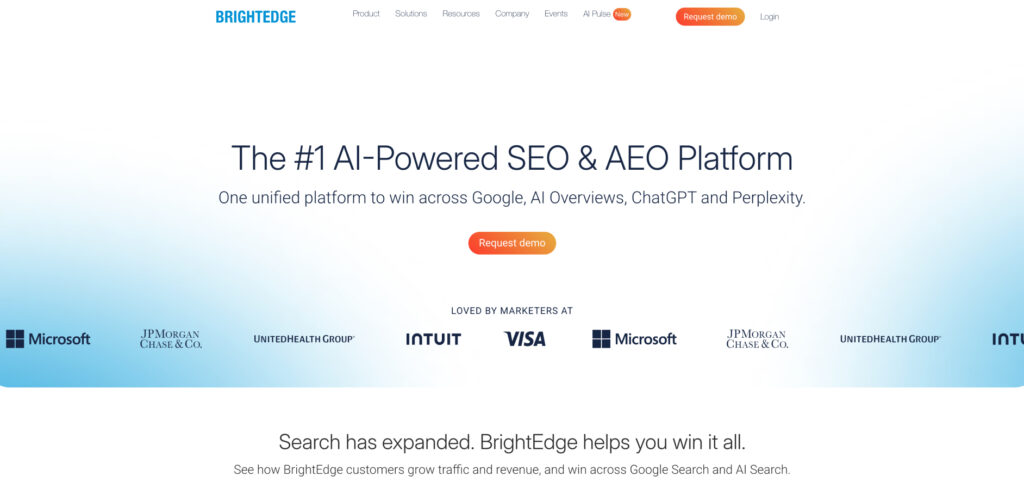
Pricing: Custom enterprise pricing, reported ~$36,000–$120,000/yr depending on seats, domains, and modules · annual contracts · demos offered, no free trial
BrightEdge has been the default enterprise SEO platform for large teams for years, and in 2026 it still sets the bar for breadth. Its Data Cube keyword universe, ContentIQ auditing, and real-time AI Overview monitoring sit in one place, with dashboards built to translate SEO into business impact for executives. For a big organization that runs search as a core channel, it’s the platform most teams reach for first.
The 2026 story is depth plus AI: BrightEdge has folded predictive visibility models and frequent AI Overview tracking into the core product rather than bolting them on, so you can watch both classic rankings and AI-surfaced presence in the same view. Few competitors match it for keyword data and competitive intelligence at enterprise scale.
The trade-offs are cost and complexity. It’s among the priciest tools here, full deployment can take one to two months, and reviewers note it rewards teams that treat it as an operating system — with named admins and clear workflows — rather than software one analyst quietly maintains.
Consider BrightEdge if:
Skip BrightEdge if:
A collaboration-first platform that puts search data in front of content, marketing, and demand-gen teams, with AI-powered recommendations and clean executive reporting.
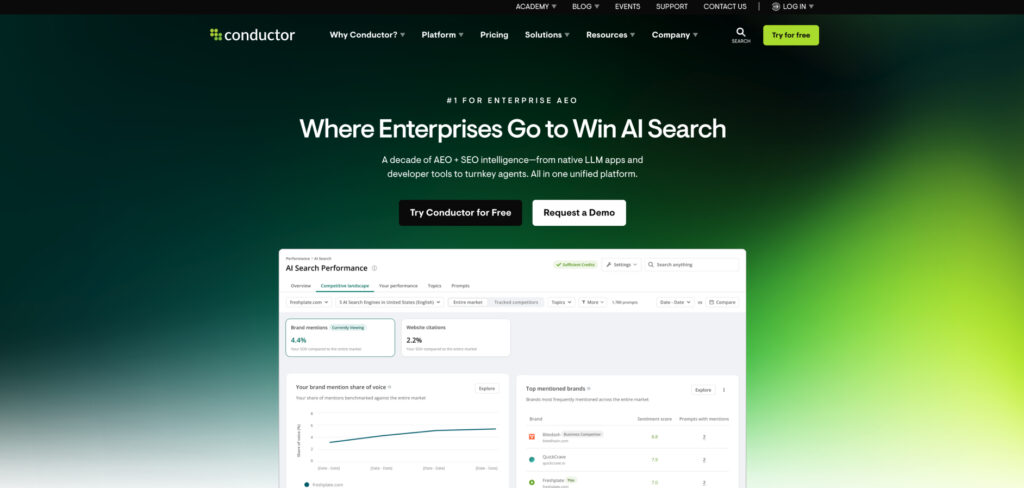
Pricing: Custom seat-based pricing, reported ~$24,000–$60,000/yr · 2–3 week onboarding · demos offered, no public free trial
Conductor is the enterprise platform built for the people who actually publish. Where BrightEdge leans technical, Conductor is designed to align SEO, content marketing, and demand generation around shared workflows, briefs, and dashboards — making it the better fit when writers and editors, not just SEO specialists, need to work directly with search data.
Seat-based pricing makes its cost more predictable than keyword-metered rivals, and onboarding is measured in weeks rather than months. Its content recommendations and reporting are pitched squarely at non-technical marketers, which is why content-led organizations keep shortlisting it.
The catch is that its strengths skew toward workflow and storytelling over raw technical depth. Teams managing JavaScript-heavy, frequently changing sites often pair it with a dedicated crawler rather than relying on it alone.
Consider Conductor if:
Skip Conductor if:
A unified enterprise platform that pulls rankings, crawl data, content, and analytics into one view, with unlimited keyword tracking and AI writing built in.
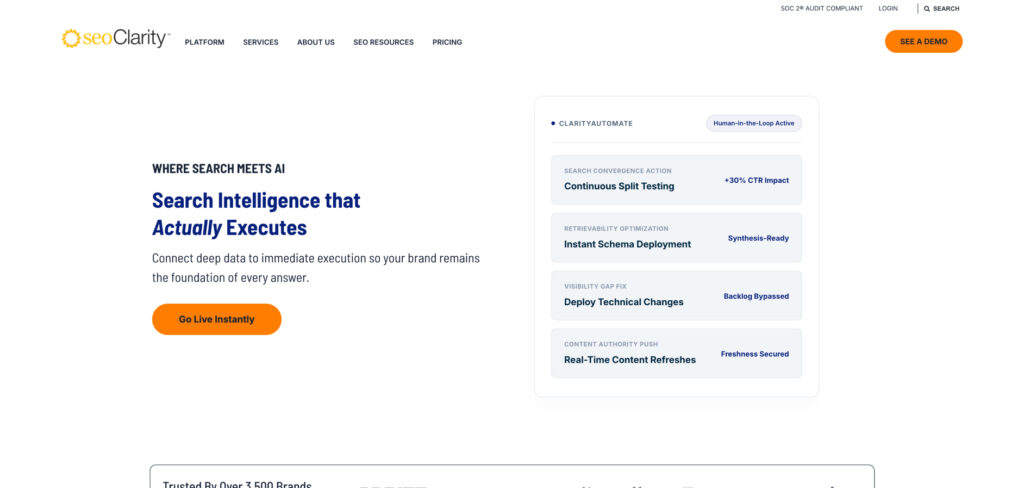
Pricing: Custom enterprise pricing, commonly ~$50,000–$100,000/yr · initial access in as little as two business days · free demo
seoClarity shines when a company wants every SEO signal in one place. The platform brings rankings, crawl logs, content data, and analytics into a shared view, so teams stop jumping between tools, and its unlimited keyword tracking removes the metering anxiety that comes with many enterprise plans.
Its differentiators are automation and speed: ClarityAutomate can roll out on-page changes without heavy dev work, Content Fusion handles AI-assisted writing and optimization, and onboarding is unusually fast for the tier — initial access in a couple of business days rather than a couple of months.
It’s strong on technical capability with a heavy client-success layer, though its content workflow is less polished than Conductor’s. Teams that want enterprise scale without BrightEdge’s complexity often land here.
Consider seoClarity if:
Skip seoClarity if:
A technical SEO powerhouse built for huge, complex sites, combining deep crawling, log-file analysis, and rendering insight for JavaScript-heavy properties.
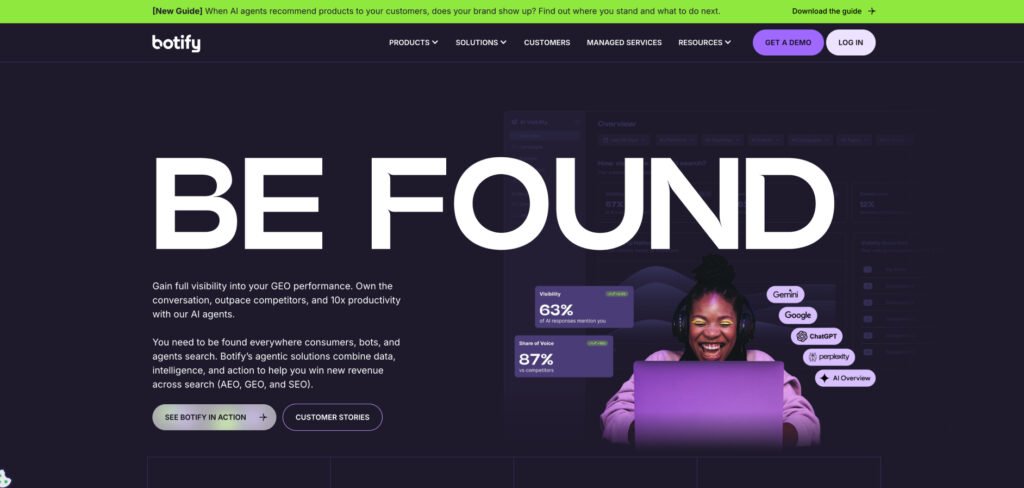
Pricing: Custom enterprise pricing, typically six figures annually for full implementations · annual contracts · demos offered
When the bottleneck is technical — millions of URLs, JavaScript rendering, crawl budget, and log files — Botify is the platform enterprise teams reach for. It pairs comprehensive crawl analysis with real search-engine log data to show not just what your site looks like, but what bots actually crawl and render, which is exactly where large sites quietly lose visibility.
That depth makes it a favorite for engineering-adjacent SEO teams at retailers, marketplaces, and publishers operating at a scale where standard crawlers simply break. It has also begun layering in AI-visibility features alongside its technical core.
The flip side is focus: Botify is a technical specialist, not a content-workflow or reporting suite. Most teams run it alongside a content platform rather than expecting it to do everything.
Consider Botify if:
Skip Botify if:
Formerly DeepCrawl, an enterprise crawl-intelligence platform focused on site health, technical auditing, and accessibility across very large websites.
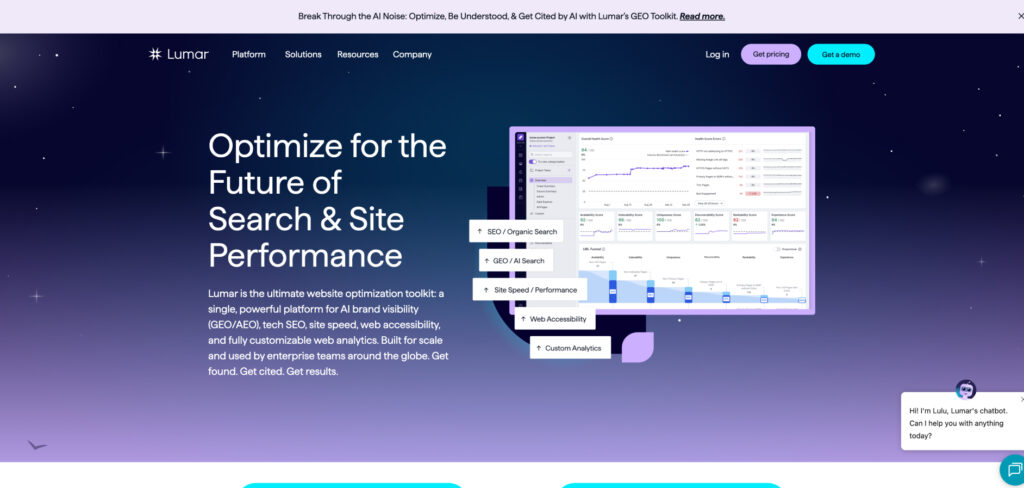
Pricing: Custom enterprise pricing scaled by crawl volume and seats · annual contracts · demos available
Lumar — the platform many still know as DeepCrawl — specializes in crawling and monitoring big sites for the technical issues that erode visibility: broken links, indexation problems, slow templates, and structural errors, surfaced in a way engineering teams can act on.
Its automation and integrations let teams bake crawl checks into deployment pipelines, catching regressions before they ship rather than discovering them weeks later in a ranking drop. Accessibility and site-health monitoring round out a platform built for governance at scale.
Like Botify, it’s a technical specialist rather than an all-in-one suite. It’s most powerful paired with a content or research platform that covers the parts of SEO it deliberately leaves alone.
Consider Lumar if:
Skip Lumar if:
The enterprise tier of the familiar all-in-one suite, adding shared workspaces, permissions, multi-brand reporting, and an AI visibility toolkit on top of classic SEO.
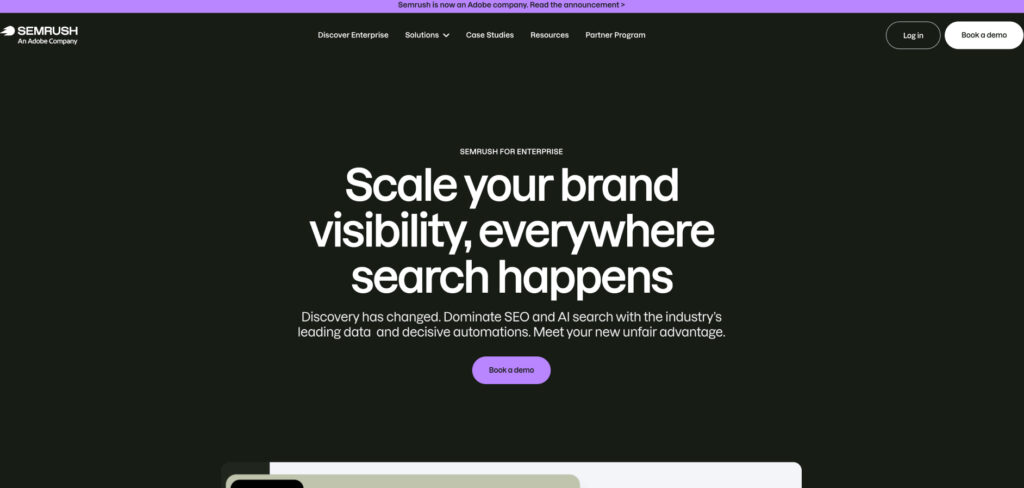
Pricing: Custom enterprise pricing; standard plans from $139.95/mo with Enterprise quoted on request · 14-day free trial on lower tiers
For organizations that want enterprise governance without the heaviest enterprise price tag, Semrush Enterprise extends the suite millions of marketers already know — keyword research, audits, rank tracking, and an AI visibility toolkit — with the seats, permissions, and multi-brand reporting larger teams require.
Its advantage is familiarity and breadth: analysts can move from a classic ranking report to an AI share-of-voice view without leaving the platform, and onboarding is lighter than the six-figure incumbents because so many people already know the tool.
It won’t match Botify on raw technical crawling or BrightEdge on bespoke enterprise reporting, but for a team that wants one broadly capable platform across both old and new search, it’s the most approachable serious option.
Consider Semrush Enterprise if:
Skip Semrush Enterprise if:
An enterprise tier built around best-in-class backlink and keyword data, with unlimited users and projects for teams that live in competitive research.
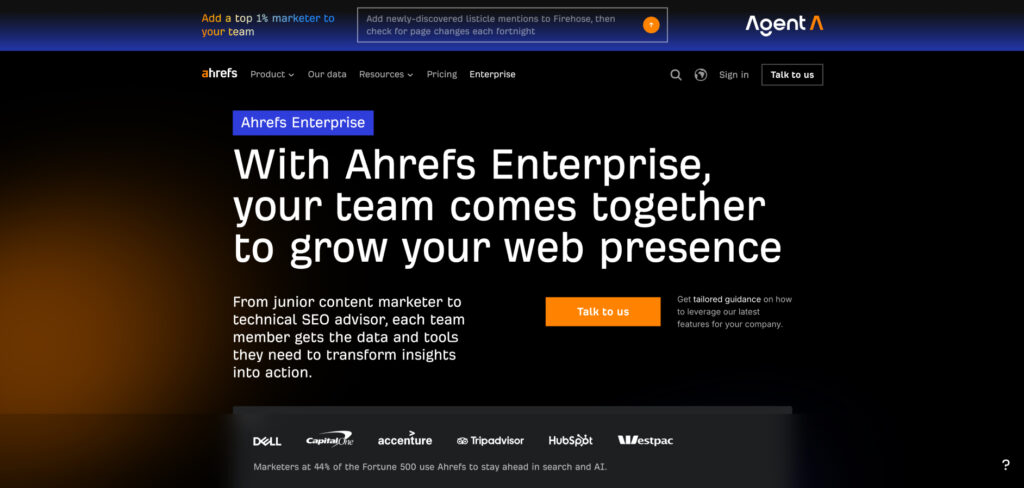
Pricing: Enterprise plans reported from around $999/mo (~$12,000/yr) with unlimited seats and projects · annual billing
Ahrefs is the data layer many SEO teams trust most, and its enterprise tier brings that depth to large organizations: a backlink index widely regarded as best-in-class, a keyword database that rivals the big incumbents, and unlimited users and projects at a fraction of typical enterprise cost.
For teams whose work centers on competitive intelligence, link analysis, and keyword research, that combination is hard to beat on value. Its Brand Radar and AI-mention features also extend it toward the answer-engine visibility most enterprises now care about.
The gap is workflow: Ahrefs is light on the content governance and team-management features platforms like Conductor and seoClarity are built around. If your SEO is research- and link-led, that’s a feature, not a flaw.
Consider Ahrefs Enterprise if:
Skip Ahrefs Enterprise if:
The enterprise standard for answer-engine intelligence: it tracks brand mentions, citations, and sentiment across major LLMs and shows the exact sources shaping those answers.
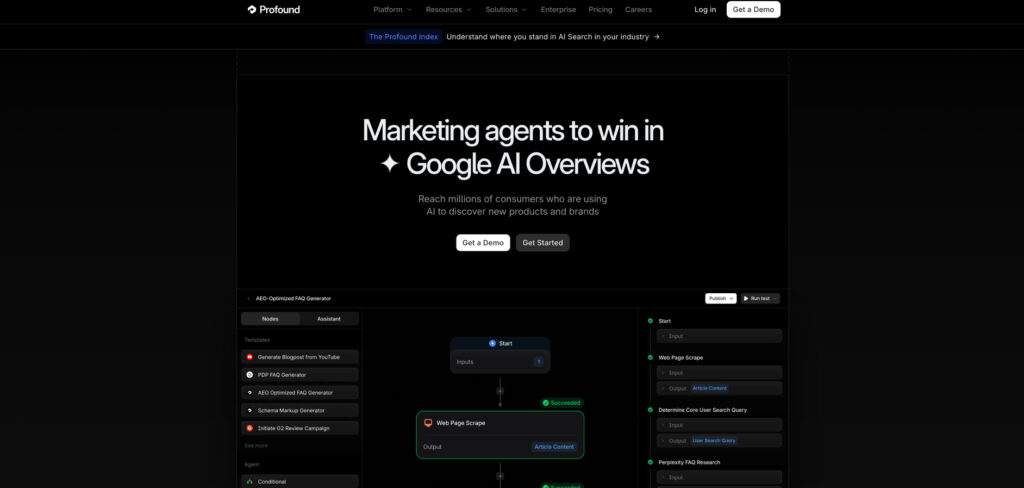
Pricing: From ~$399/mo for entry tiers; Enterprise custom · demos offered, no free trial
Traditional SEO platforms tell you where you rank; Profound tells you whether ChatGPT, Perplexity, Gemini, and AI Overviews mention you at all — and why. For enterprises watching research queries shift from search boxes to chat, that’s increasingly a board-level question rather than an experiment.
It goes beyond a single share-of-voice score to surface the prompts that trigger mentions, the competitors who win the ones you lose, and the underlying pages and threads the models cite. That source-level visibility turns AI presence from a metric you watch into a workflow you can act on.
It’s a dedicated tracker, not a full SEO suite, so most enterprises pair it with BrightEdge or Semrush rather than replacing them. The most common 2026 stack is a classic platform plus Profound for the AI layer.
Consider Profound if:
Skip Profound if:
A polished content-optimization platform that grades drafts against top-ranking pages, helping large content teams hit relevance and depth consistently at scale.
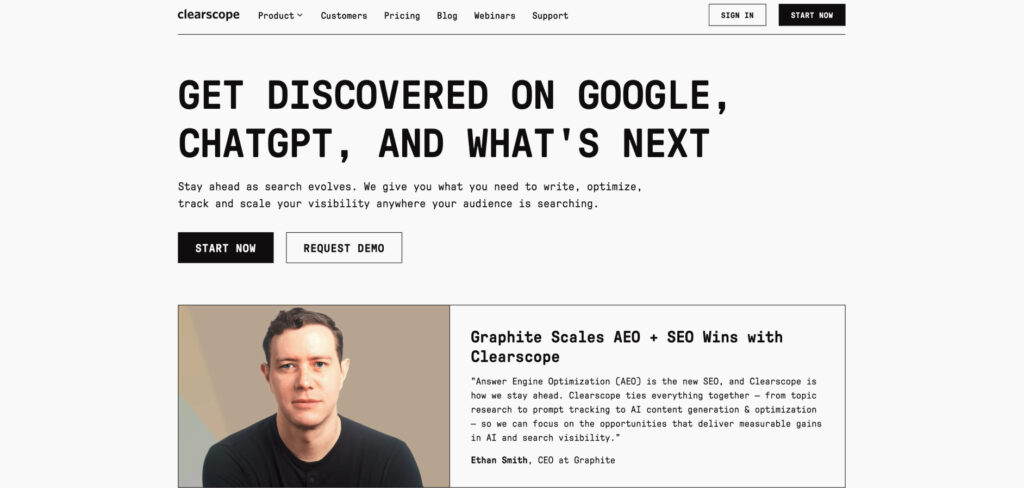
Pricing: Essentials from $189/mo · Business and Enterprise custom with more seats and integrations · annual options
Clearscope is the content optimizer enterprises trust for relevance. It analyzes the pages already ranking for a term and gives writers clear, graded guidance on the topics and depth a page needs — which, as search rewards topical completeness over keyword stuffing, increasingly tracks with being cited in AI answers too.
Its strength for large organizations is consistency: a clean interface, strong Google Docs and WordPress integrations, and shared guidelines that keep quality even across dozens of writers and agencies. It does one job and does it exceptionally well.
It’s deliberately narrow — a content tool, not a research, crawl, or rank-tracking suite — so it sits alongside a broader platform rather than replacing one. For mapping authority across thousands of pages, some teams also weigh MarketMuse.
Consider Clearscope if:
Skip Clearscope if:
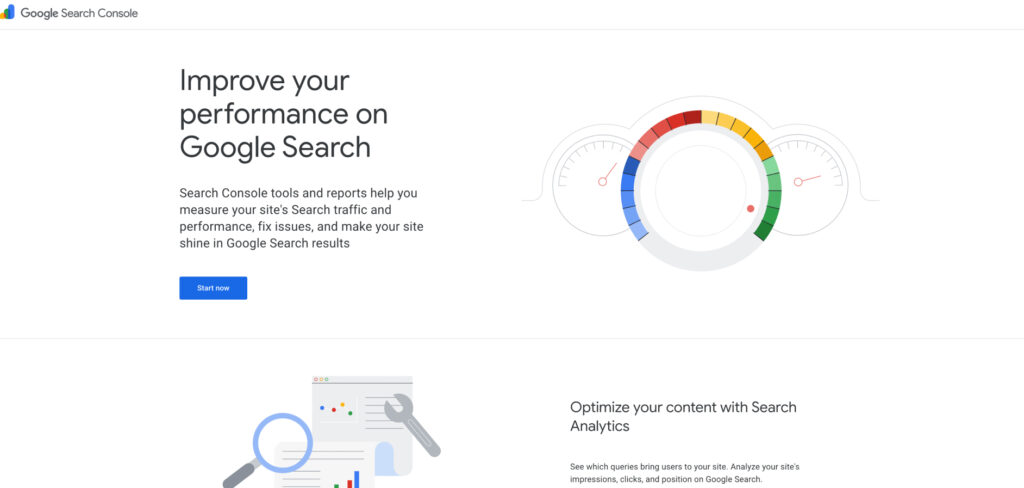
Free, first-party data from Google on how your site actually performs in search — now including impressions and clicks from AI features.
Pricing: Free
Every enterprise site should be using Google Search Console, full stop. It’s the only tool that shows Google’s own view of your pages — the queries you appear for, where you rank, and what’s blocking pages from being indexed — and at scale its API is essential for piping first-party data into your own dashboards.
As Google has folded AI Overviews and AI Mode into results, that performance data increasingly reflects AI-surfaced impressions too, giving you a free, if partial, read on AI visibility alongside the paid platforms.
It won’t crawl like Botify, track competitors, or tell you why an LLM cites you. But no enterprise stack is complete without it, and it costs nothing — so it belongs in every toolkit no matter how much you spend elsewhere.
Consider Google Search Console if:
Skip Google Search Console if: