

healthcare

AGENCY

10 Best Healthcare Digital Marketing Agencies in 2026

Healthcare digital marketing in 2026 operates under a set of demands that no other industry faces simultaneously: strict HIPAA compliance requirements, complex patient decision journeys, rising competition from health systems and telehealth disruptors, and the accelerating influence of AI-powered search on how patients find care. 

Quick Comparison Table

| Agency

| Best For

| Core Expertise

| Pricing

Cardinal Digital Marketing

Multi-location health systems & specialty practices

HIPAA-compliant PPC, SEO, paid social, full-funnel analytics

From $3,000/mo

Healthcare Success

Hospitals, large health systems, multilocation medical & dental

Integrated digital + traditional, branding, paid search, SEO

From $5,000/mo

Intrepy Healthcare Marketing

Specialty physicians, clinics & telemedicine brands

Physician branding, HIPAA-compliant SEO, telemedicine marketing

From $2,500/mo

Ignite Visibility

Multi-channel growth brands in healthcare & medtech

Google Ads, PMax, SEO, YouTube, reputation management

From $3,000/mo

Thrive Agency

B2B, mid-market & data-driven healthcare brands

AI SEO, GA4, PPC, reputation management, content

From $1,500/mo

Sagapixel

Private practices, dermatology, fertility & med spas

Healthcare-exclusive SEO, Google Ads, content, web design

From $1,500/mo

Scorpion

Multi-location practices, DSOs & urgent care chains

Local SEO, paid search, reputation, automation platforms

From $2,000/mo

Accelerated Digital Media

Telehealth, biotech & wellness brands

Performance marketing, patient acquisition, paid media

From $3,000/mo

SmartSites

Small-to-mid-size practices & local healthcare providers

Google Ads, SEO, web design, reputation management

From $1,000/mo

Digital Logic

Specialty practices & healthcare companies seeking exclusive focus

Healthcare-only SEO, paid search, medical web development

From $2,000/mo

This guide evaluates the 10 best healthcare digital marketing agencies operating in 2026, rated across five dimensions: Services & Expertise, Affordability, Reviews & Reputation, Case Studies & Results, and Communication & Transparency. Whether you are a specialty practice building patient volume, a multi-location health system scaling across markets, or a telehealth brand competing for high-intent digital search traffic, this list helps you find the right partner.

1. Cardinal Digital Marketing

| Best for: Multi-location health systems, specialty practices, and DSOs that need HIPAA-compliant full-funnel digital marketing with granular geographic targeting and proven patient acquisition at scale.
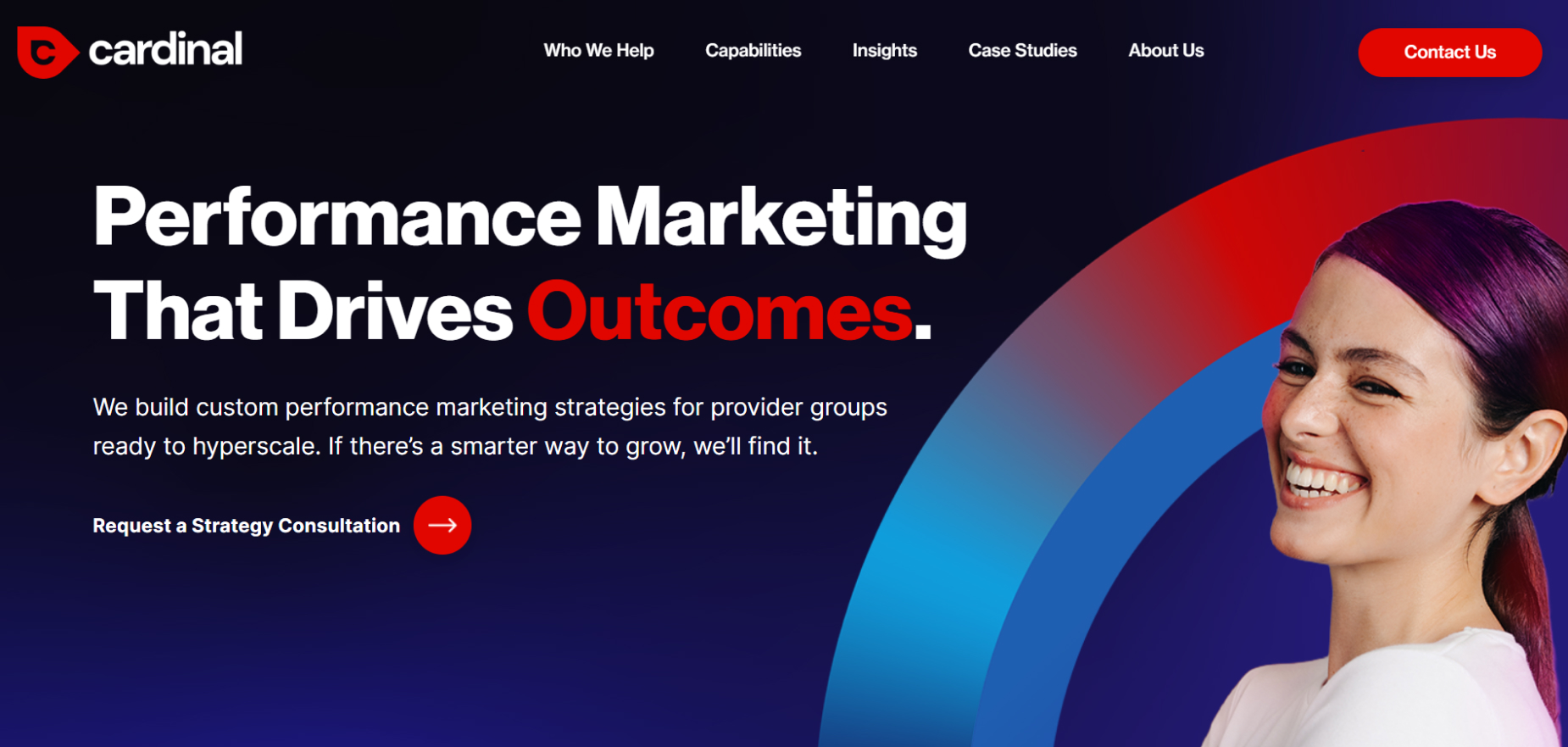
Cardinal Digital Marketing

Visit Website ->

Services & Expertise

Full-funnel healthcare marketing: SEO, PPC, paid social, analytics, HIPAA compliance, and custom reporting. Exceptional multi-location campaign infrastructure and intent-based audience targeting.

Affordability

Mid-to-upper pricing reflecting the complexity of multi-location healthcare campaigns. Retainers typically start at $3,000/month. Strong ROI for growing practices and health systems.

Reviews & Reputation

Consistently ranked among the top healthcare digital marketing agencies on Clutch, G2, and DesignRush. Recognized for measurable patient acquisition results and strategic transparency.

Case Studies & Results

Multi-location clients report 40–80% patient volume increases. Health system clients achieve consistent cost-per-acquisition improvements through location-level audience segmentation.

Communication & Transparency

Custom reporting dashboards, dedicated account teams, and regular strategy reviews. Clients consistently cite visibility into performance data as a core differentiator.

2. Healthcare Success

| Best for: Hospitals, large health systems, multilocation medical and dental organizations, and pharma brands that need a full-service partner combining digital and traditional healthcare marketing under one roof.
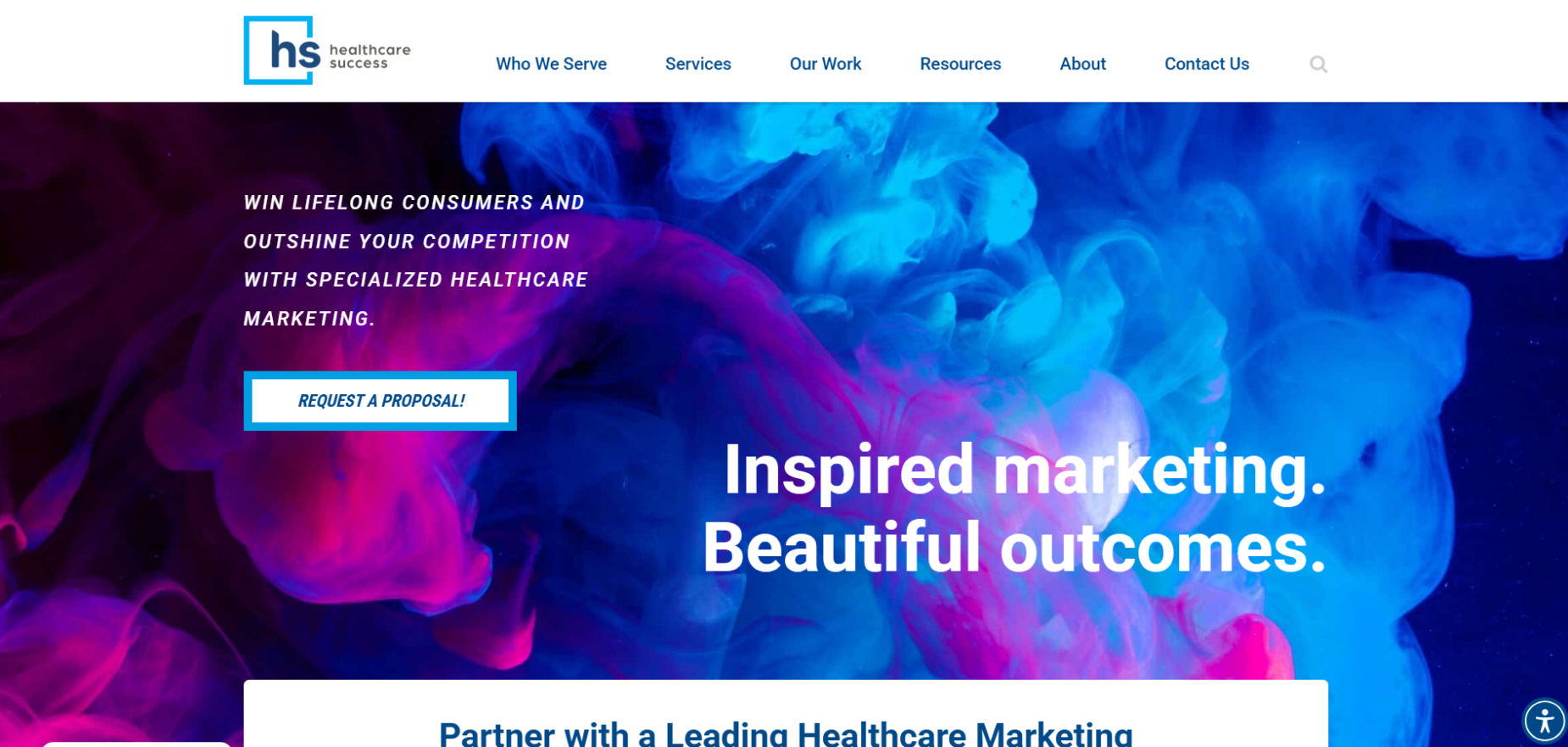
Healthcare Success's Homepage

Visit Website ->

Services & Expertise

Comprehensive omnichannel capability: digital marketing, branding, paid search, SEO, content, social, reputation management, traditional advertising, and analytics. One of the few agencies delivering true integration.

Affordability

Enterprise-tier pricing suited to hospitals, large practices, and health systems. Not designed for micro-budgets but delivers outsized brand and acquisition impact at scale.

Reviews & Reputation

20+ years of client trust, consistent recognition across DesignRush, Clutch, and industry publications. Regarded as one of the definitive authorities in healthcare marketing.

Case Studies & Results

Hospital clients report significant patient acquisition and service line growth. Multilocation dental and medical clients see consistent revenue improvements through integrated brand and performance campaigns.

Communication & Transparency

Structured campaign reporting, senior strategist involvement, and clear milestone tracking. Clients describe the agency as a true strategic partner rather than a vendor.

3. Intrepy Healthcare Marketing

| Best for: Specialty physicians, clinics, and telemedicine brands that need a healthcare-exclusive agency with deep expertise in physician branding, HIPAA-compliant SEO, and patient acquisition for competitive medical specialties.
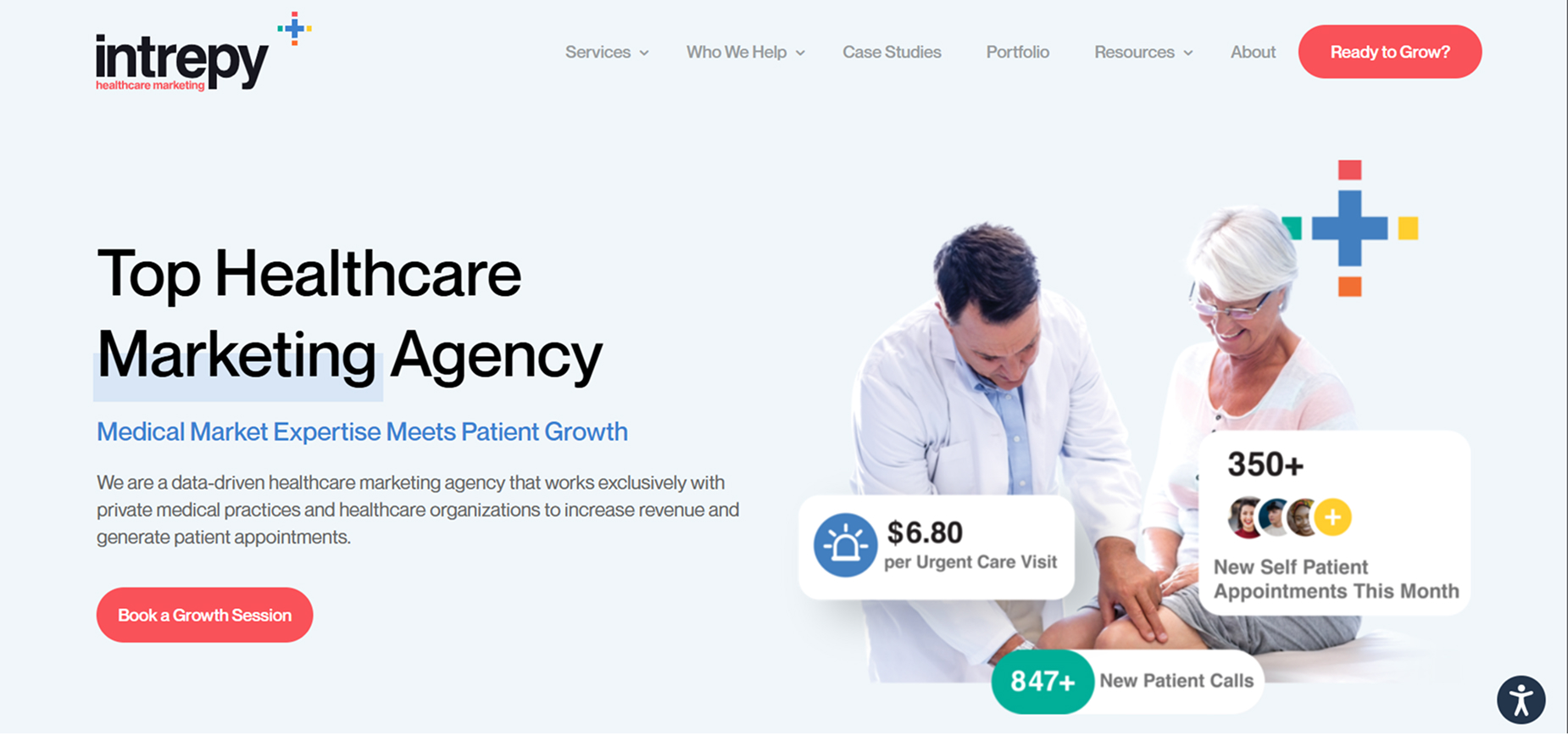
Intrepy Healthcare Marketing's Homepage

Visit Website ->

Services & Expertise

Healthcare-exclusive: physician SEO, HIPAA-compliant paid media, telemedicine marketing, reputation management, web development, and content. Deep specialization in competitive medical niches.

Affordability

Mid-range pricing starting around $2,500/month. Accessible for independent specialty practices and growing clinic groups. Strong ROI relative to the depth of healthcare-specific expertise delivered.

Reviews & Reputation

Consistently ranked among the best healthcare digital marketing agencies. Strong Clutch and Google review profile with high marks for strategic clarity and HIPAA-compliant execution.

Case Studies & Results

Specialty practices report significant patient inquiry growth through physician SEO campaigns. Telemedicine clients see consistent appointment booking improvements within 90 days of engagement.

Communication & Transparency

Dedicated account managers, regular performance reporting, and clear communication on HIPAA compliance status. Clients cite strategic transparency as a key differentiator.

4. Ignite Visibility

| Best for: Healthcare and medtech brands seeking integrated multi-channel growth where Google Ads, SEO, paid social, and reputation management are managed under a single partner with cross-channel attribution intelligence.
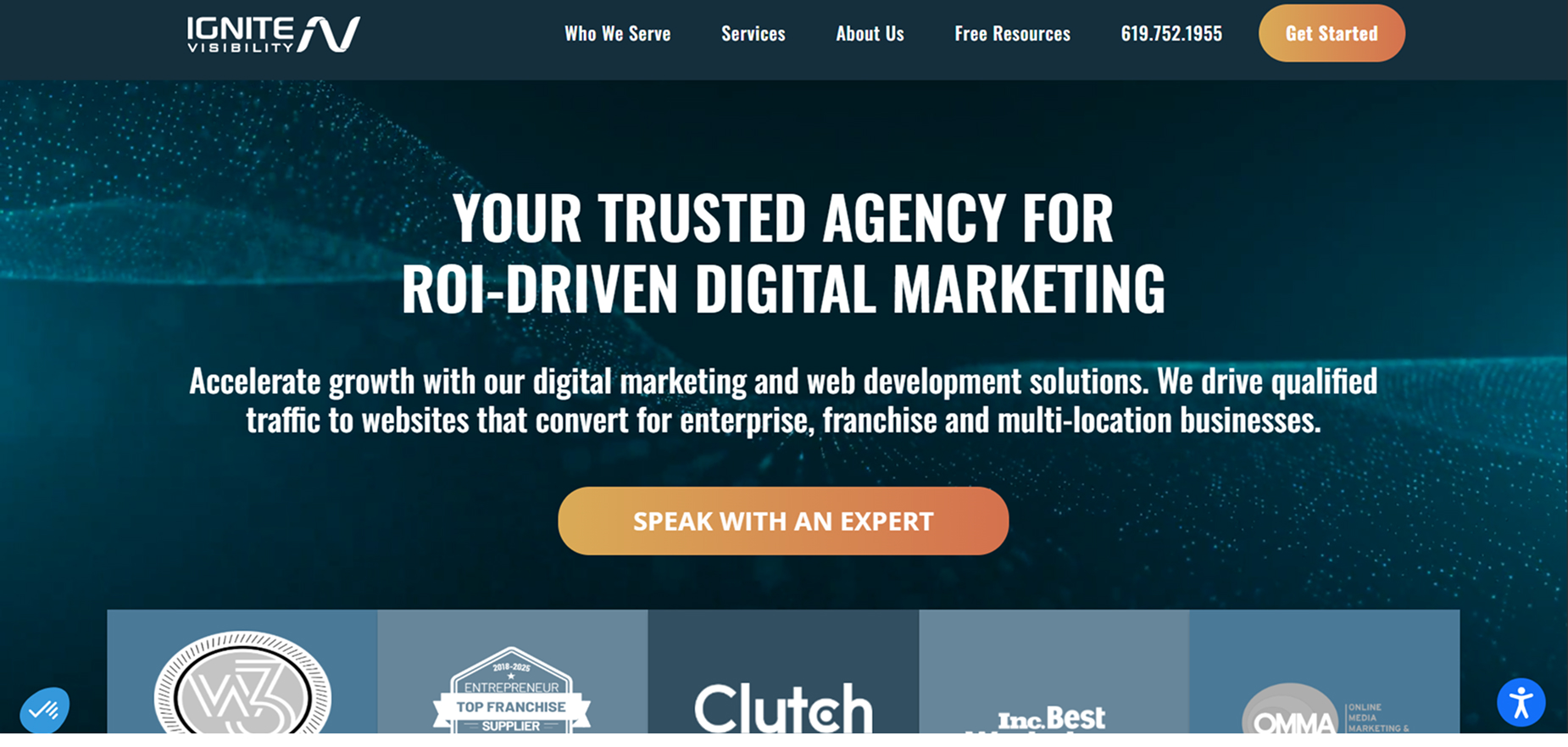
Ignite Visibility's Homepage

Visit Website ->

Services & Expertise

Google Search, Display, YouTube, Performance Max, SEO, paid social, reputation management, CRO, and email. Genuinely full-service with strong healthcare-specific execution.

Affordability

Mid-market pricing with retainers typically beginning at $3,000/month for Google Ads management. Full-service packages run higher but deliver cross-channel value.

Reviews & Reputation

Clutch Top Agency, Inc. 5000 (4x), and named top digital marketing agency by Newsweek. Healthcare clients consistently highlight the quality of multi-channel reporting and strategic communication.

Case Studies & Results

Healthcare and legal clients report 30–50% CPA reductions within six months. Multi-channel healthcare campaigns consistently outperform single-channel approaches in patient acquisition efficiency.

Communication & Transparency

Proprietary reporting platform with real-time data. Dedicated account managers and monthly strategy reviews. Clients cite strategic clarity and transparency as standout qualities.

5. Thrive Agency

| Best for: Mid-market and enterprise healthcare brands, B2B health companies, and data-driven practices that need rigorous digital marketing grounded in AI SEO, GA4 optimization, and multi-touch attribution modeling.
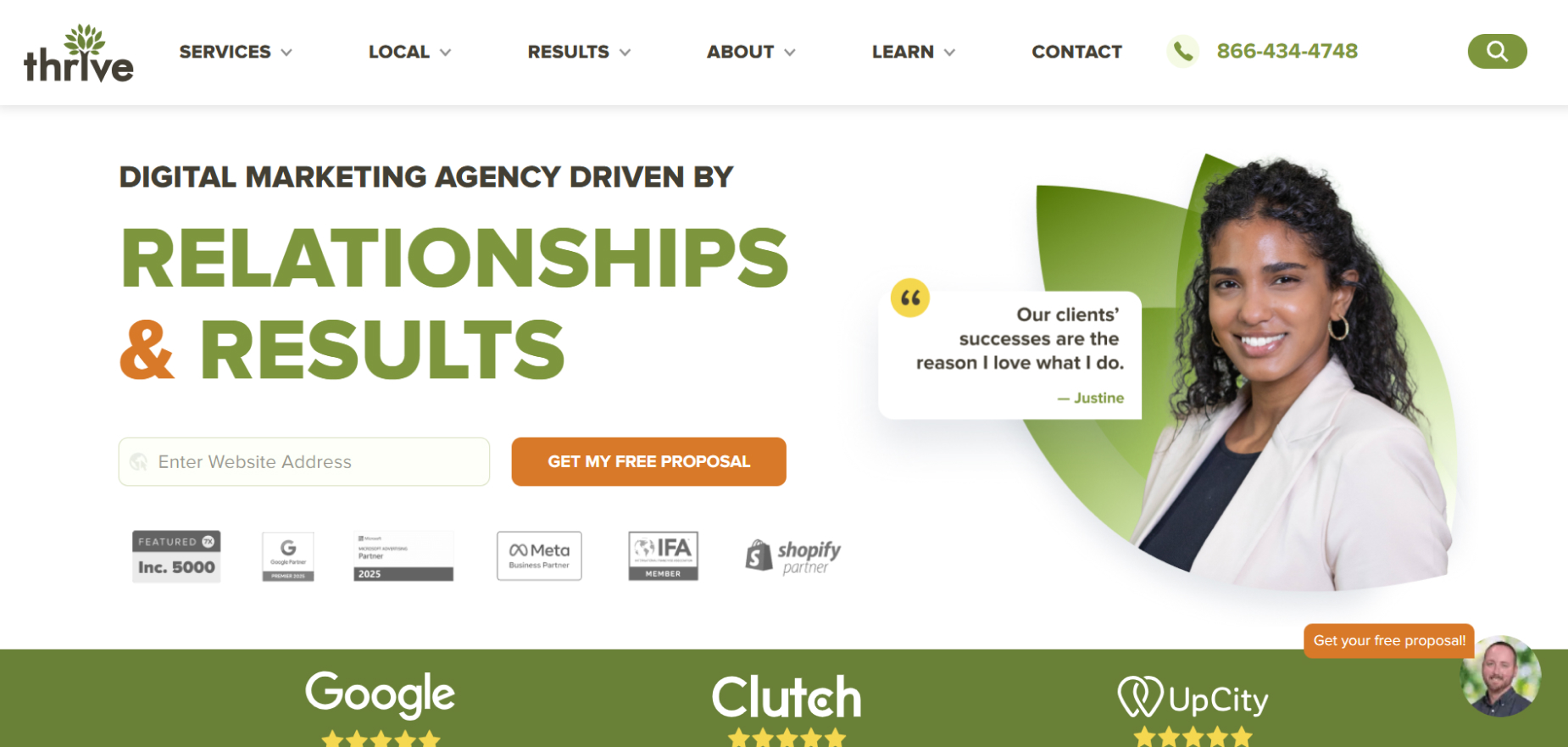
Thrive Agency's Homepage

Visit Website ->

Services & Expertise

AI SEO, PPC, GA4 analytics, reputation management, content marketing, web design, and social. Proprietary tools (Thrive Stats, Thrive Score) add measurable advantage in tracking and optimization.

Affordability

Mid-range pricing starting around $1,500/month. No-contract model reduces commitment risk for growing practices. Good value for the depth of analytics and campaign management delivered.

Reviews & Reputation

300+ Clutch reviews with a 4.9/5 average. Two decades of client trust across healthcare and adjacent verticals. Frequently cited in top agency rankings for both PPC and SEO.

Case Studies & Results

Healthcare franchise clients report 50–100% patient lead volume increases. Medical clients see consistent CPA reductions through account restructuring and precision negative keyword optimization.

Communication & Transparency

Weekly or bi-weekly reporting, dedicated account managers, and GA4 dashboards. Clients cite clear communication and proactive optimization recommendations as key strengths.

6. Sagapixel

| Best for: Private practices, dermatologists, fertility clinics, med spas, and home care agencies that need a healthcare-exclusive digital marketing partner with deep SEO and PPC specialization built entirely around patient acquisition.
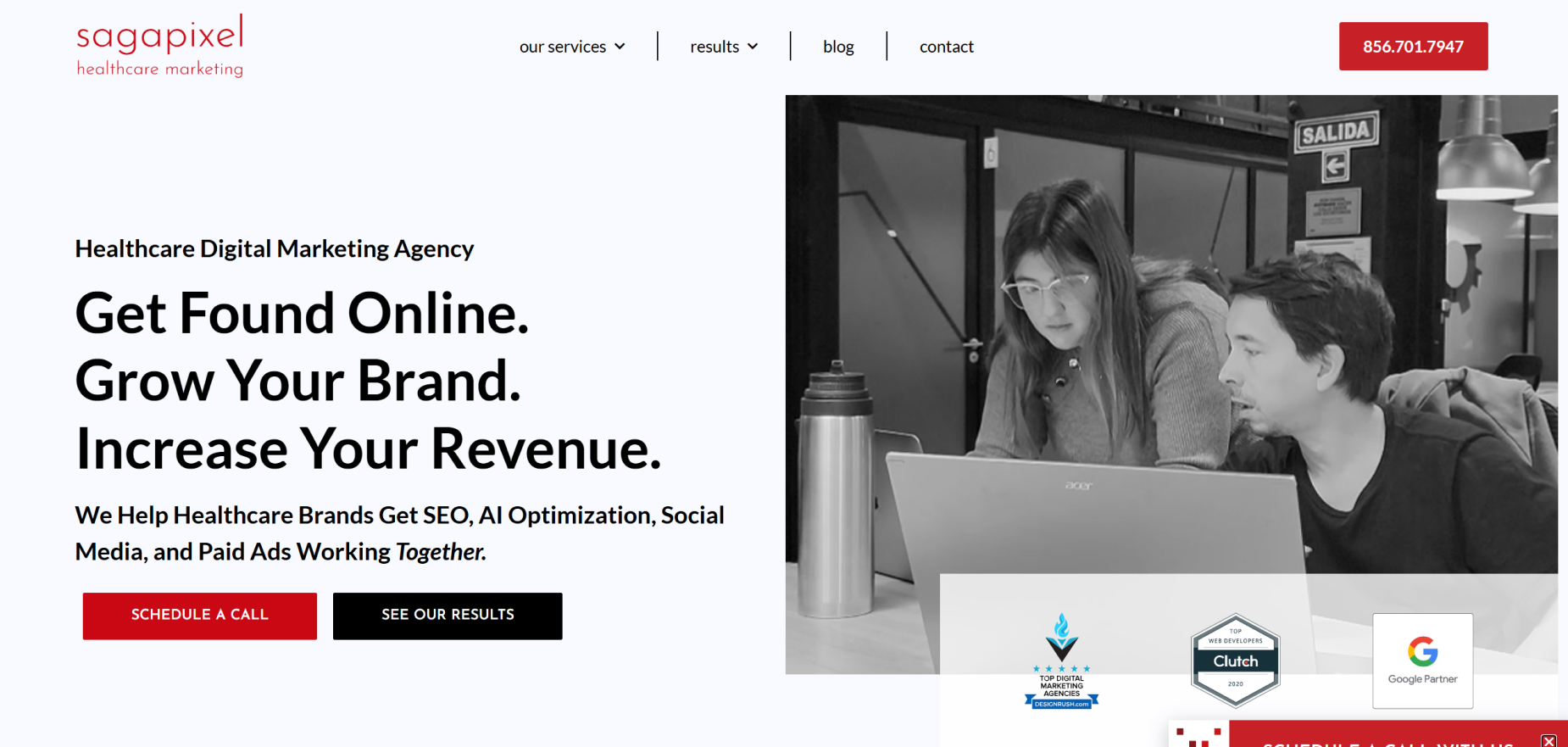
Sagapixel's Homepage

Visit Website ->

Services & Expertise

Healthcare-exclusive SEO, Google Ads, content written by medically informed professionals, website design, and patient conversion optimization. Genuine niche depth across multiple specialty verticals.

Affordability

Mid-range pricing accessible for private practices. Retainers starting around $1,500/month make Sagapixel viable for growing specialty clinics. Transparent scope-based pricing model.

Reviews & Reputation

Strong reputation among specialty practice owners. Consistently recommended for healthcare-exclusive expertise, medically accurate content, and measurable patient inquiry growth.

Case Studies & Results

Dermatology and fertility clinic clients report consistent new patient inquiry growth through SEO. Med spa clients see measurable improvements in appointment bookings within 60–90 days.

Communication & Transparency

Dedicated account managers, regular performance reports, and clear compliance communication. Clients consistently describe Sagapixel as a trustworthy growth partner that understands their industry.

7. Scorpion

| Best for: Multi-location practices, DSOs, urgent care chains, and franchise health networks that need an enterprise marketing platform combining local SEO, paid search, reputation management, and marketing automation at scale.
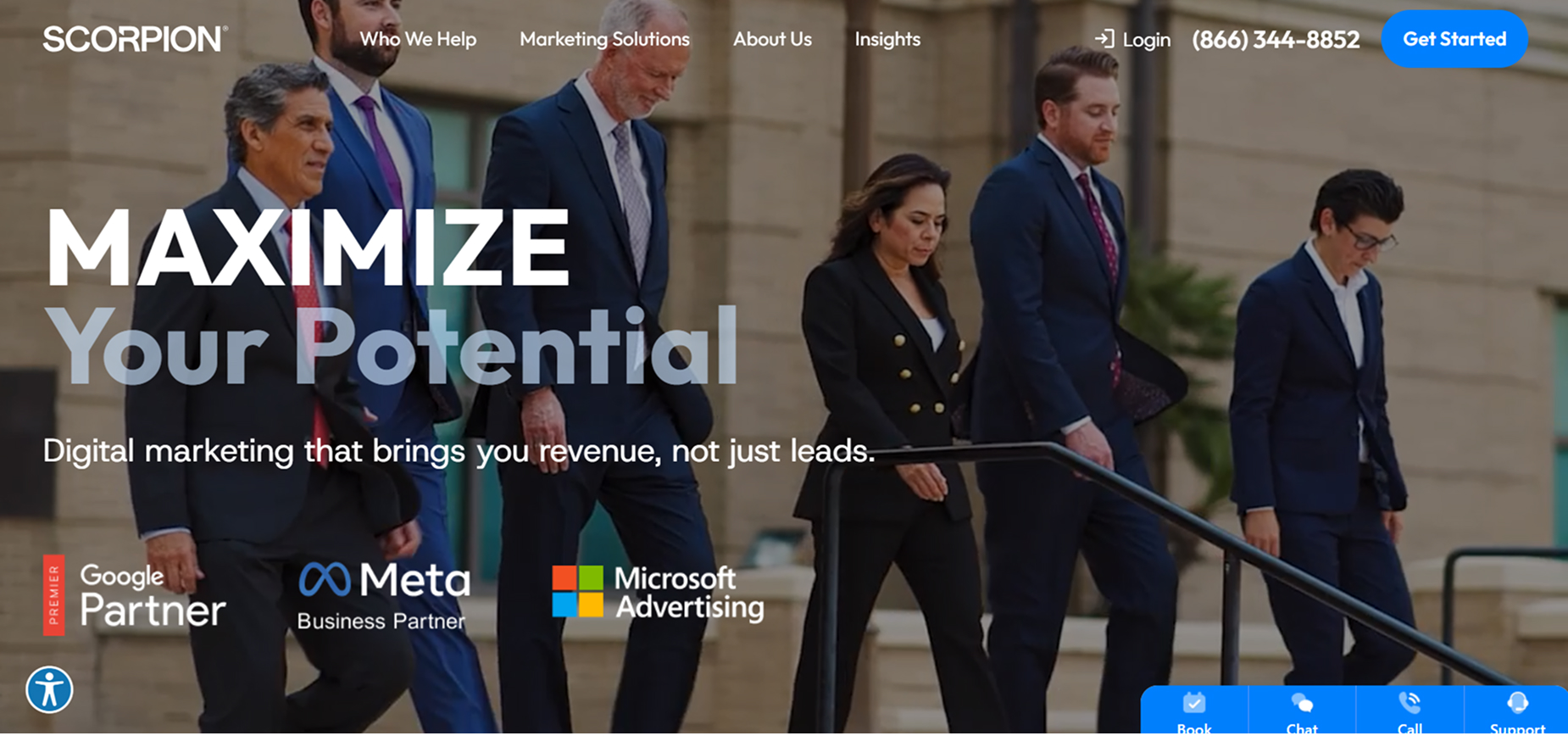
Scorpion's Homepage

Visit Website ->

Services & Expertise

Local SEO, Google Ads, reputation management, website development, content marketing, and proprietary marketing automation platform. Especially powerful for multi-location healthcare operators.

Affordability

Mid-market pricing starting around $2,000/month per location or enterprise packages for large groups. Platform value increases significantly with location count, making it most cost-efficient at scale.

Reviews & Reputation

Widely recognized as a leading healthcare marketing platform. Strong reputation among DSOs and franchise healthcare networks for scalable execution and consistent local performance.

Case Studies & Results

Multi-location dental and urgent care clients report 40–80% appointment volume increases. Franchise healthcare groups achieve consistent new patient growth through automated local campaign management.

Communication & Transparency

Dedicated account managers, platform-level reporting across all locations, and regular strategy reviews. Clients value the combination of automation-driven efficiency and strategic human oversight.

8. Accelerated Digital Media

| Best for: Telehealth companies, biotech brands, wellness startups, and life sciences organizations that need performance-focused patient acquisition campaigns built for digital-first healthcare businesses.
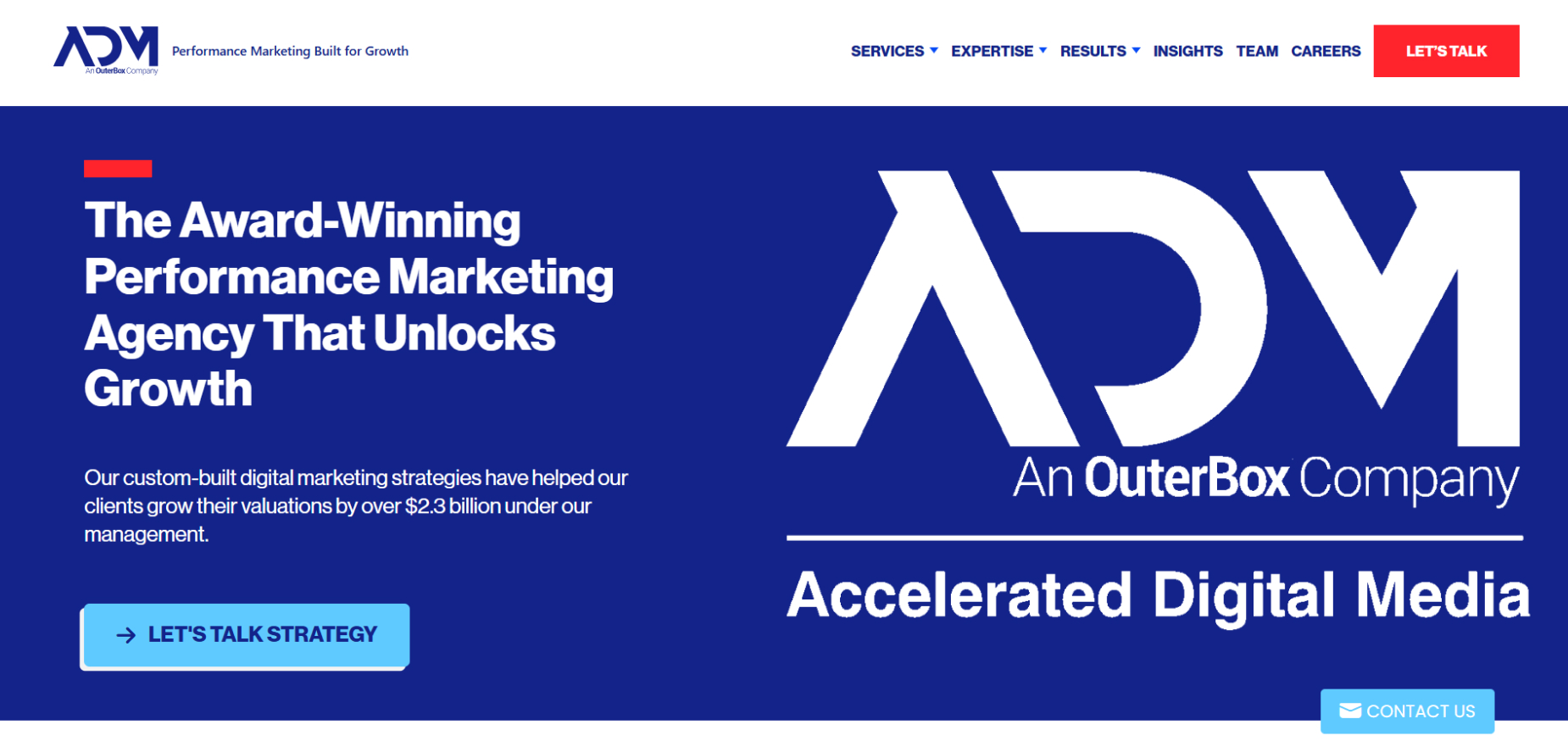
Accelerated Digital Media's Homepage

Visit Website ->

Services & Expertise

Performance marketing across Google, Meta, programmatic, and CTV. HIPAA-compliant tracking, life sciences advertising expertise, and patient acquisition campaign specialization for telehealth and biotech.

Affordability

Mid-range pricing starting around $3,000/month. Focused on growth-stage healthcare companies and telehealth brands with meaningful advertising budgets and clear patient acquisition goals.

Reviews & Reputation

Strong reputation in the telehealth and life sciences marketing community. Recognized for performance-driven approach, compliance expertise, and measurable patient acquisition results.

Case Studies & Results

Telehealth clients report consistent patient acquisition cost improvements through multi-channel optimization. Life sciences brands achieve measurable awareness and conversion growth in competitive markets.

Communication & Transparency

Performance-linked reporting, dedicated account teams, and clear communication around regulatory compliance. Clients appreciate the agency’s understanding of healthcare-specific advertising constraints.

9. SmartSites

| Best for: Small-to-mid-size healthcare practices, local clinics, and independent providers that need professional, results-driven digital marketing at accessible price points without sacrificing Google Ads or SEO quality.

SmartSites's Homepage

Visit Website ->

Services & Expertise

Google Ads, SEO, web design, paid social, and reputation management. Strong local healthcare practice experience with Google Premier Partner status ensuring access to advanced campaign features.

Affordability

One of the most accessible agencies on this list. Retainers start around $1,000/month, making SmartSites viable for independent practices and small clinic groups with limited marketing budgets.

Reviews & Reputation

300+ verified Clutch reviews, 100% recommendation rate. One of the most positively reviewed agencies in the digital marketing space across all verticals.

Case Studies & Results

Local healthcare and medical clients report 40–80% lead volume increases. Dental and chiropractic practices see consistent new patient inquiry growth through local SEO and Google Ads optimization.

Communication & Transparency

Clients consistently praise responsiveness, clear reporting, and proactive communication. Dedicated account managers and weekly updates ensure healthcare providers stay informed on campaign performance.

10. Digital Logic

| Best for: Specialty healthcare practices and medical companies seeking an exclusively healthcare-focused agency that delivers performance-driven SEO, paid search, and web development without the distraction of other industries.
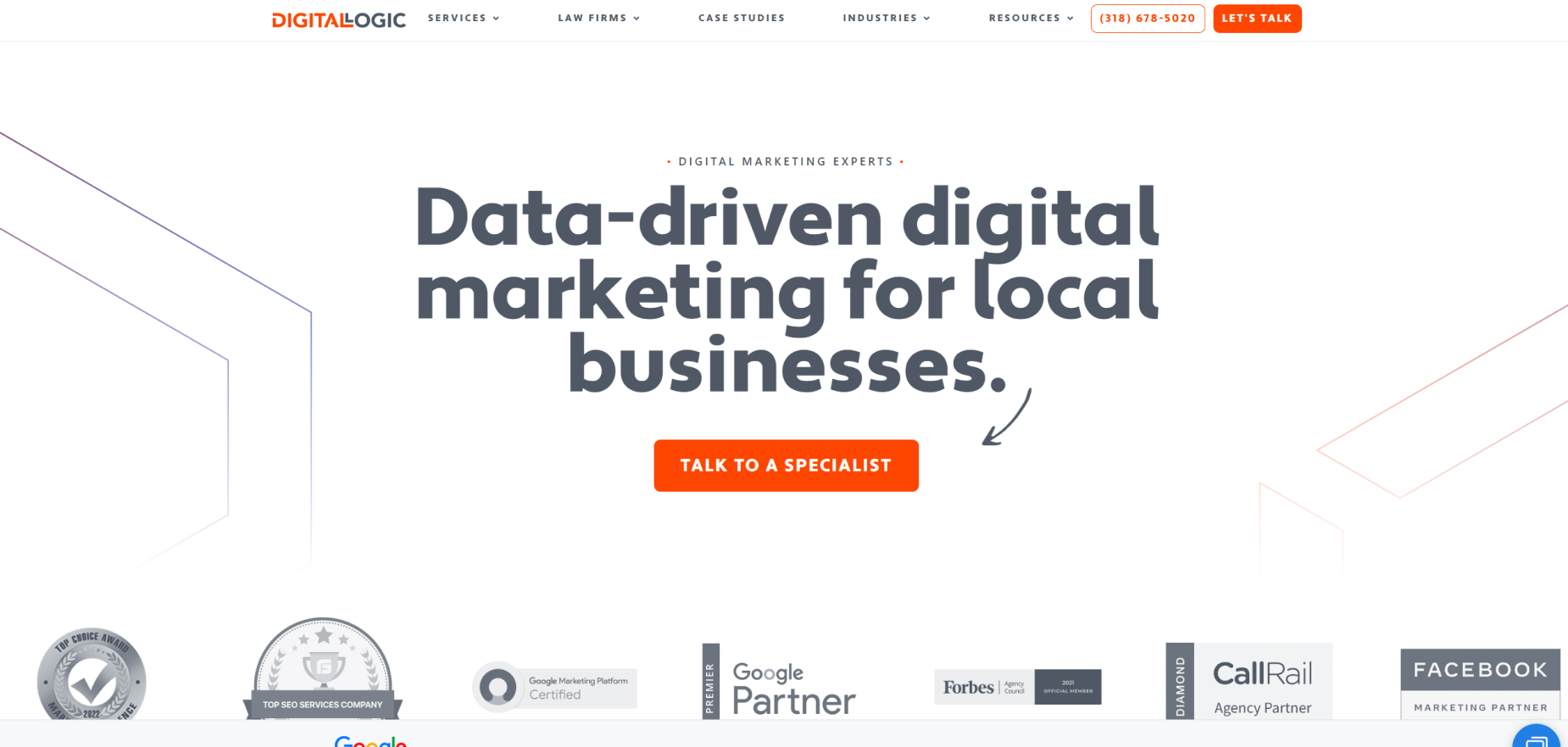
Digital Logic's Homepage

Visit Website ->

Services & Expertise

Healthcare-only SEO, paid search, medical web development, and content marketing. Exclusive industry focus ensures strategies are built on real healthcare market knowledge without cross-industry compromises.

Affordability

Accessible mid-range pricing starting around $2,000/month. Lean team structure enables strong value delivery for specialty practices that need focused healthcare expertise without enterprise-tier costs.

Reviews & Reputation

Solid reputation within the healthcare marketing community. Clients consistently cite the value of exclusive healthcare focus and the absence of generalist assumptions in strategy and execution.

Case Studies & Results

Specialty practice clients report consistent patient inquiry growth through SEO and paid search. Healthcare companies see measurable improvement in organic rankings and conversion rates within six months.

Communication & Transparency

Dedicated account attention, regular performance reporting, and clear communication on strategy rationale. Clients appreciate the transparency and direct access to senior team members.


How to Choose the Right Healthcare Digital Marketing Agency

Start with Best For — match the description to your organization type, patient population, and primary acquisition goal before anything else.

Then check Core Expertise against the specific healthcare marketing capability you actually need: HIPAA-compliant paid search, multi-location SEO, physician branding, telehealth patient acquisition, or reputation management for competitive specialties. These are distinct skill sets, and not every agency excels at all of them.

Use Pricing as your floor, not your ceiling — final retainers always depend on ad spend volume, number of locations, scope of service, and market complexity. Monthly retainers suit practices needing ongoing optimization and content iteration; project-based fees suit defined campaign launches or website rebuilds.

FAQs

Q1: Can a healthcare agency still run Google Ads if my practice doesn’t have a physical address (e.g., fully virtual telehealth)?

Yes, but it requires specific setup. Google’s healthcare ad policies allow telehealth advertisers to run ads without a physical location if they meet verification requirements and disclose their virtual nature. Agencies experienced in telehealth will use service-area targeting and ensure landing pages clearly state the virtual model to avoid disapprovals.

Q2: What happens to my SEO rankings if I switch healthcare marketing agencies mid-campaign?

Short-term fluctuations are common during transitions. A reputable incoming agency will conduct a full technical and content audit before making changes. Request a transition document from your outgoing agency covering active link-building efforts, keyword targets, and on-page optimizations. Rushed transitions without documentation often cause ranking drops that take 3–6 months to recover.

Q3: How do healthcare agencies handle Google’s ‘Your Money or Your Life’ (YMYL) content standards for medical websites?

YMYL pages—those offering medical advice or service information—are held to Google’s highest quality standards. Top agencies respond by sourcing content from licensed clinicians, citing peer-reviewed references, adding author credentials to every article, and ensuring E-E-A-T signals (Experience, Expertise, Authoritativeness, Trustworthiness) are structurally embedded across the site.

Q4: Is it possible for a healthcare agency to run retargeting ads without violating HIPAA?

Yes, but only with HIPAA-safe infrastructure. Agencies must use a Business Associate Agreement (BAA) with any ad platform or analytics tool that processes patient data. Most use server-side tagging and hashed identifiers to retarget visitors without exposing Protected Health Information. Pixel-based retargeting without these safeguards is non-compliant and increasingly triggering OCR investigations.

Q5: What is the average timeframe before a new patient acquisition campaign starts generating measurable ROI?

For PPC, qualified leads typically appear within 2–4 weeks of campaign launch as bidding algorithms optimize. SEO takes 4–6 months before meaningful organic traffic shifts occur. A realistic expectation for measurable ROI from a combined paid and organic strategy is 90–120 days, with most agencies setting formal performance benchmarks at the 6-month mark.

Q6: Do healthcare marketing agencies typically own the ad accounts, or does the practice retain ownership?

This varies significantly—and it matters enormously. Reputable agencies grant you ownership of all ad accounts, Google Analytics properties, and Search Console access. Some agencies retain ownership as a lock-in tactic, meaning if you leave, you lose all campaign history and performance data. Always confirm account ownership in your contract before signing.

Q7: How do agencies differentiate their healthcare SEO strategy between single-location clinics and multi-location health systems?

Single-location strategies focus on hyperlocal keyword clusters, Google Business Profile optimization, and building neighborhood-level authority. Multi-location systems require a scalable architecture with location landing pages, consistent NAP citations across all markets, and centralized content hubs that push link equity to individual locations without triggering duplicate content penalties.

Q8: What tracking limitations exist for healthcare advertisers since Apple’s iOS 14 and subsequent privacy updates?

iOS privacy changes significantly reduced mobile ad attribution accuracy across Meta and Google platforms. Healthcare agencies now rely on aggregated event measurement, probabilistic attribution models, and server-side conversion tracking to compensate. Campaigns that previously tracked 90%+ of conversions may now capture 60–70%, requiring agencies to weight offline conversion data and CRM integrations more heavily.

Q9: Can a healthcare marketing agency help with physician recruitment marketing, or is it strictly patient-facing?

Many healthcare agencies handle both. Physician and provider recruitment requires different channels—LinkedIn Ads, healthcare job boards, and reputation-focused content targeting medical professionals. Agencies with B2B healthcare experience can build parallel campaigns that recruit physicians while simultaneously driving patient volume, using distinct audience segments, messaging frameworks, and landing page experiences for each.

Q10: How should a practice evaluate whether an agency’s reported results are actually attributable to their marketing efforts?

Request multi-touch attribution reporting rather than last-click data. Any reputable agency should be able to show assisted conversions, attribution paths, and incrementality analysis. Also ask for baseline comparisons: what was new patient volume before the engagement? If an agency can only show vanity metrics like impressions or traffic without tying them to appointments booked, that is a red flag.

Q11: What distinguishes a healthcare-exclusive agency from a general digital marketing agency that lists healthcare as a vertical?

Healthcare-exclusive agencies have staff with clinical content knowledge, HIPAA compliance infrastructure already in place, and agency-level Business Associate Agreements with ad platforms. General agencies adding healthcare as a vertical often lack these, meaning compliance gaps, medically inaccurate content, and slower campaign launches. Always ask how many of their current clients are exclusively in healthcare.

Q12: How do agencies navigate reputation management for practices with a mix of legitimate negative reviews and fake competitor reviews?

Agencies use a tiered approach: Google’s review removal request process for policy-violating reviews, strategic response frameworks for legitimate negative feedback, and proactive review generation campaigns to dilute anomalies. Identifying fake reviews typically involves IP pattern analysis and review velocity monitoring. Suppression of legitimate complaints without resolution is unethical and detectable by prospective patients.

Q13: What role does schema markup play in healthcare SEO, and do most agencies implement it correctly?

Schema markup—specifically MedicalOrganization, Physician, MedicalClinic, and FAQPage schema—directly influences rich result eligibility in Google Search. Many agencies implement basic LocalBusiness schema but overlook specialty-level medical schemas that can dramatically improve click-through rates. Ask agencies to show examples of structured data audits and verify their work using Google’s Rich Results Testing Tool.

Q14: How do healthcare agencies structure pricing for multi-location clients compared to single-practice engagements?

Most agencies apply a tiered multi-location model: a base management fee plus per-location incremental costs. Some use a flat enterprise rate for systems above a certain location threshold. Shared creative assets and centralized reporting reduce per-location costs, but geo-specific campaign customization and local citation management add variable costs. Always request itemized pricing by location and service line.

Q15: Are healthcare marketing agencies equipped to handle marketing for cash-pay versus insurance-based practices differently?

They should be—the conversion funnel is entirely different. Cash-pay practices require transparent price communication, financing option promotion, and value-driven messaging. Insurance-based practices need in-network verification CTAs and insurance-specific landing pages. Agencies unfamiliar with this distinction often apply generic healthcare messaging that underperforms because it fails to address the primary conversion barrier specific to each payment model.

Q16: What is the agency’s responsibility if a campaign runs non-compliant ads that result in an OCR investigation?

Contractually, liability depends on your service agreement. Agencies with HIPAA compliance expertise will carry their own cyber liability insurance and indemnify clients for compliance errors within their scope of work. Practices remain the Covered Entity under HIPAA regardless of agency involvement, so oversight cannot be fully delegated. Always review the indemnification clause and require proof of the agency’s cyber insurance policy.

Q17: How do agencies approach marketing for healthcare practices in highly saturated local markets where top competitors have 10+ years of SEO history?

The most effective approach in saturated markets is topical authority building—creating comprehensive content clusters around specialty subtopics where established competitors have gaps. Combined with targeted link acquisition from local health systems, medical associations, and news outlets, new entrants can achieve first-page rankings on high-intent specialty terms within 9–18 months even against entrenched competitors.

Q18: Can healthcare marketing agencies integrate with EMR/EHR platforms for closed-loop attribution between ad clicks and actual appointments scheduled?

Yes, though it requires careful HIPAA-safe implementation. Leading agencies use middleware integrations or custom APIs to pull de-identified appointment data from EMRs like Epic, athenahealth, or Kareo into reporting dashboards. This enables true closed-loop attribution: matching ad spend to booked and kept appointments. Fewer than 30% of healthcare agencies have this capability operationalized at a practice level.

Q19: What should a practice ask about an agency’s content review process to ensure medical accuracy before publication?

Ask specifically: Who reviews medical claims before content goes live? Is that reviewer a licensed clinician or a non-medical editor using secondary sources? Does the agency use a formal editorial checklist aligned with medical style guides? Best-in-class agencies employ or contract with licensed practitioners (physicians, NPs, or PAs) for clinical review, with documented sign-off before any health claim is published.

Q20: How does an agency’s approach change when marketing to patients in states with restrictive abortion or gender-affirming care laws after the Dobbs decision?

Geo-targeting and messaging now carry legal risk in certain states. Compliant agencies geo-restrict ads in states where specific services are restricted, avoid listing restricted services on location-specific landing pages, and consult healthcare attorneys before launching campaigns involving reproductive or gender-affirming care. This is an emerging area where most generalist agencies lack the legal awareness that healthcare-specialized agencies maintain as standard practice.


Bill Nash's face

About the author, Bill Nash

Bill Nash is the CMO of Marketing LTB with over a decade of experience, he has driven growth for Fortune 500 companies and startups through data-driven campaigns and advanced marketing technologies. He has written over 400 pieces of content about marketing, covering topics like marketing tips, guides, AI in advertising, advanced PPC strategies, conversion optimization, and others.

Terms & Conditions

Privacy Policy